Secondary Glazing for Conservation Areas in Richmond
Richmond's numerous conservation areas require careful consideration when installing secondary glazing. Our expertise in local planning regulations ensures compliant installations that deliver significant benefits for noise reduction and energy efficiency.
From riverside properties near Richmond Bridge to period homes throughout the borough, we provide sympathetic solutions that enhance comfort while preserving the area's distinctive character and heritage value.
Get Richmond Quote
Local Planning Regulation Compliance
Richmond Council Liaison
Direct collaboration with Richmond upon Thames planning department to ensure all installations meet conservation area requirements.
Conservation Area Assessments
Detailed assessments of your property's conservation area status and specific restrictions that may apply to window alterations.
Planning Application Support
Complete planning application assistance including heritage statements, detailed drawings, and liaison with conservation officers.
Noise Reduction in Sensitive Areas
Richmond-Specific Noise Challenges
- •Aircraft noise from Heathrow flight paths
- •Traffic from A316 and Richmond town center
- •Railway noise from Richmond and District lines
- •Riverside traffic and Thames boat activity
Energy Efficiency in Conservation Areas
Thermal Performance Improvements
Many of Richmond's conservation area properties feature original single-glazed windows that cannot be replaced due to planning restrictions. Secondary glazing provides a sympathetic solution for improving thermal efficiency.
- •Up to 65% improvement in thermal efficiency
- •Significant reduction in heating costs
- •Enhanced comfort in period properties
Environmental Considerations
- •Reduced carbon footprint through improved insulation
- •Preservation of existing windows reduces waste
- •Long-term sustainable solution for heritage properties
- •Contribution to Richmond's environmental goals
Area-Specific Installation Solutions
Riverside Properties
Specialized solutions for properties near the Thames, addressing both noise and moisture considerations.
Victorian Terraces
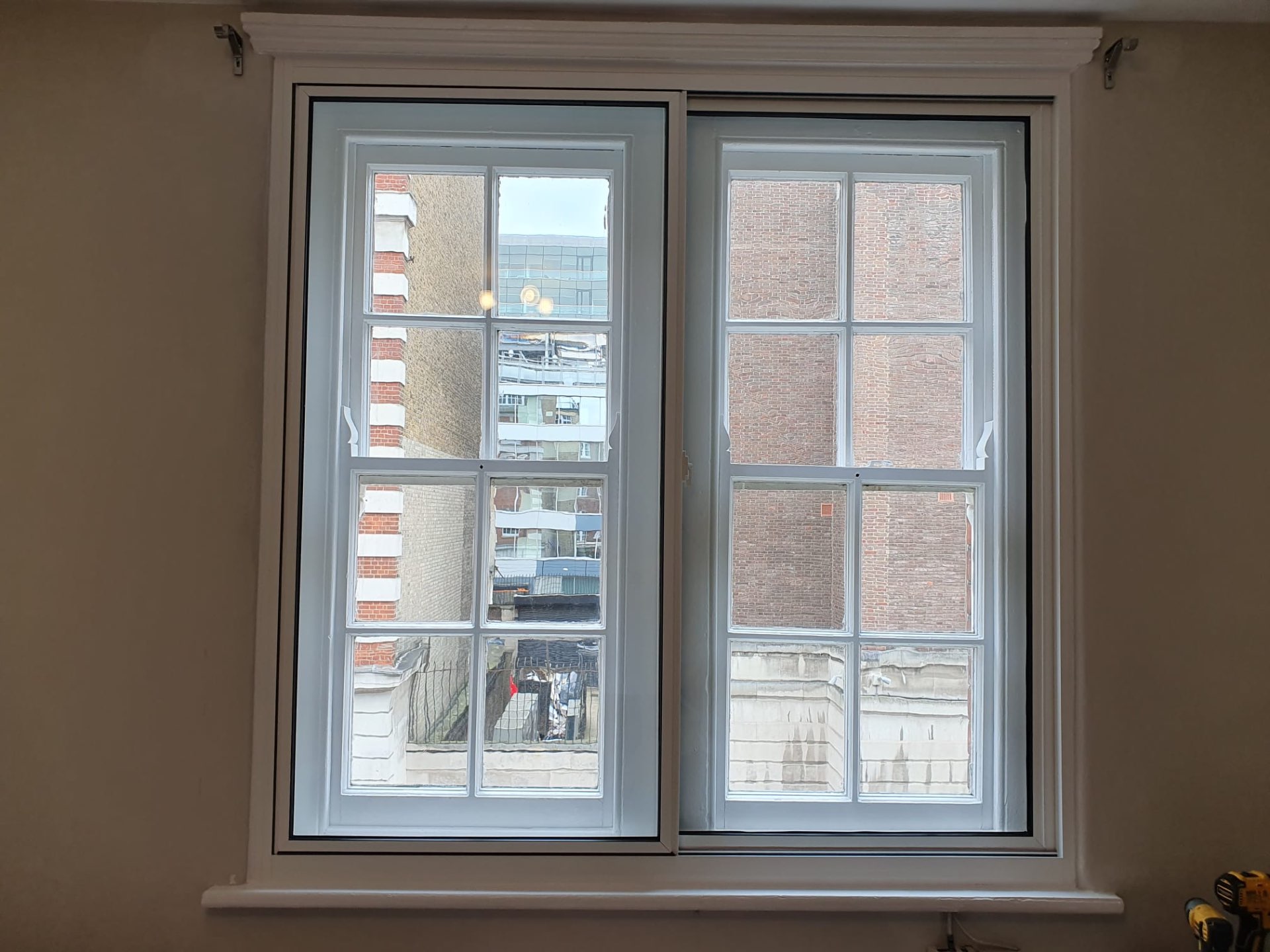
Period-appropriate installations for Richmond's extensive Victorian housing stock with sash window expertise.
Edwardian Villas
Solutions for larger Edwardian properties with bay windows and original leaded glass features.
Georgian Houses
Sympathetic treatments for Richmond's Georgian properties maintaining classical proportions and details.
Richmond Conservation Success Stories
Richmond Hill Conservation Area
Working with Richmond Council's conservation team, we successfully installed secondary glazing in a Grade II listed Georgian villa, achieving:
- • 75% noise reduction from nearby traffic
- • 60% improvement in thermal efficiency
- • Full planning approval within 8 weeks
- • Zero alteration to original fabric
Riverside Development
Multiple properties near Richmond Bridge benefited from our conservation-compliant secondary glazing, delivering:
- • Significant aircraft noise reduction
- • Enhanced security for ground floor windows
- • Improved thermal comfort year-round
- • Preservation of river views
TW9, TW10 Conservation Area Specification
Richmond upon Thames covers 70+ designated conservation areas — Richmond Hill, Richmond Green, Petersham, Ham Common, Kew Green, and the riverside frontages. The dominant noise source for most TW9/TW10 properties is Heathrow approach traffic during easterly operations (around 30% of the year), with Lmax pass-by levels of 70–78 dBA. Secondary noise sources are the A316 (50–60 dBA at distance), the District Line and Richmond station, and Thames boat traffic in summer. LBH Richmond's planning policy CP7 explicitly identifies secondary glazing as the preferred upgrade route for conservation-area and listed properties.
- Properties under Heathrow approach (north Richmond, Kew): 10.8mm acoustic + 200mm cavity, Rw 52 dB combined
- A316-adjacent (East Sheen, Mortlake): 8.8mm acoustic + 150mm cavity, Rw 48 dB combined
- Riverside and quieter conservation interiors: 6.8mm acoustic + 150mm cavity, Rw 46 dB combined
- Thermal-led briefs: Low-E secondary glass + 150mm cavity, Uw 1.6 W/m²K (74% reduction over single-glazed primary)
- Conservation Area Consent: we supply CAC submission packages including drawings, performance schedules, and Historic England compliance notes
Transform Your Richmond Conservation Property
Get expert advice on conservation-compliant secondary glazing for your Richmond property. Full planning support and heritage assessment included.