Bay Window Secondary Glazing
Transform your beautiful Victorian or Edwardian bay from a cold, draughty showcase into a warm, comfortable living space with professional secondary glazing. Maintain the character of original bay windows while improving performance - learn about preserving Victorian windows and Edwardian property glazing. Whether you're battling soaring energy bills, street noise, or simply want to make your iconic bay window usable year-round, secondary glazing offers the perfect solution - preserving your period property's characterwhile delivering modern performance.
45-60% Heat Loss Reduction
Dramatic energy savings
70-80% Noise Reduction
Peace from street noise
Heritage Preserved
Original bays intact
50-70% Cost Savings
vs. bay replacement
Why Bay Windows Desperately Need Secondary Glazing
Bay windows are architectural treasures that define Victorian and Edwardian streetscapes across London. From the classic box bays of Islington terraces to the elegant canted bays of Ealing villas, these projecting windows create character and charm. However, they also present unique challenges that make them prime candidates for secondary glazing.
Massive Heat Loss Through Large Glass Areas
Unlike single windows, bay windows feature 3-5 individual panels creating an enormous glass surface area. Most Victorian and Edwardian bays remain single-glazed, turning your beautiful architectural feature into a massive heat-loss zone. The bay's projection from the building creates a thermal bridge, making the bay area the coldest part of your room.
Heritage Value vs Modern Comfort
Replacing authentic period bays typically costs £3,000-£10,000 per bay and destroys irreplaceable architectural features. Many Victorian and Edwardian bays are protected under listed building designations or conservation area restrictions, making replacement impossible or extremely difficult to achieve planning permission.
The Cold Bay Zone Problem
- • That beautiful bay window seat becomes unusable in winter due to cold draughts radiating from the large glass surface
- • Multiple window seals across 3-5 panels multiply draught sources
- • The prominent street-facing position amplifies traffic noise
- • Condensation issues leading to potential damp and mould problems
Understanding Different Bay Window Types
Box Bay Windows (90° Angles)
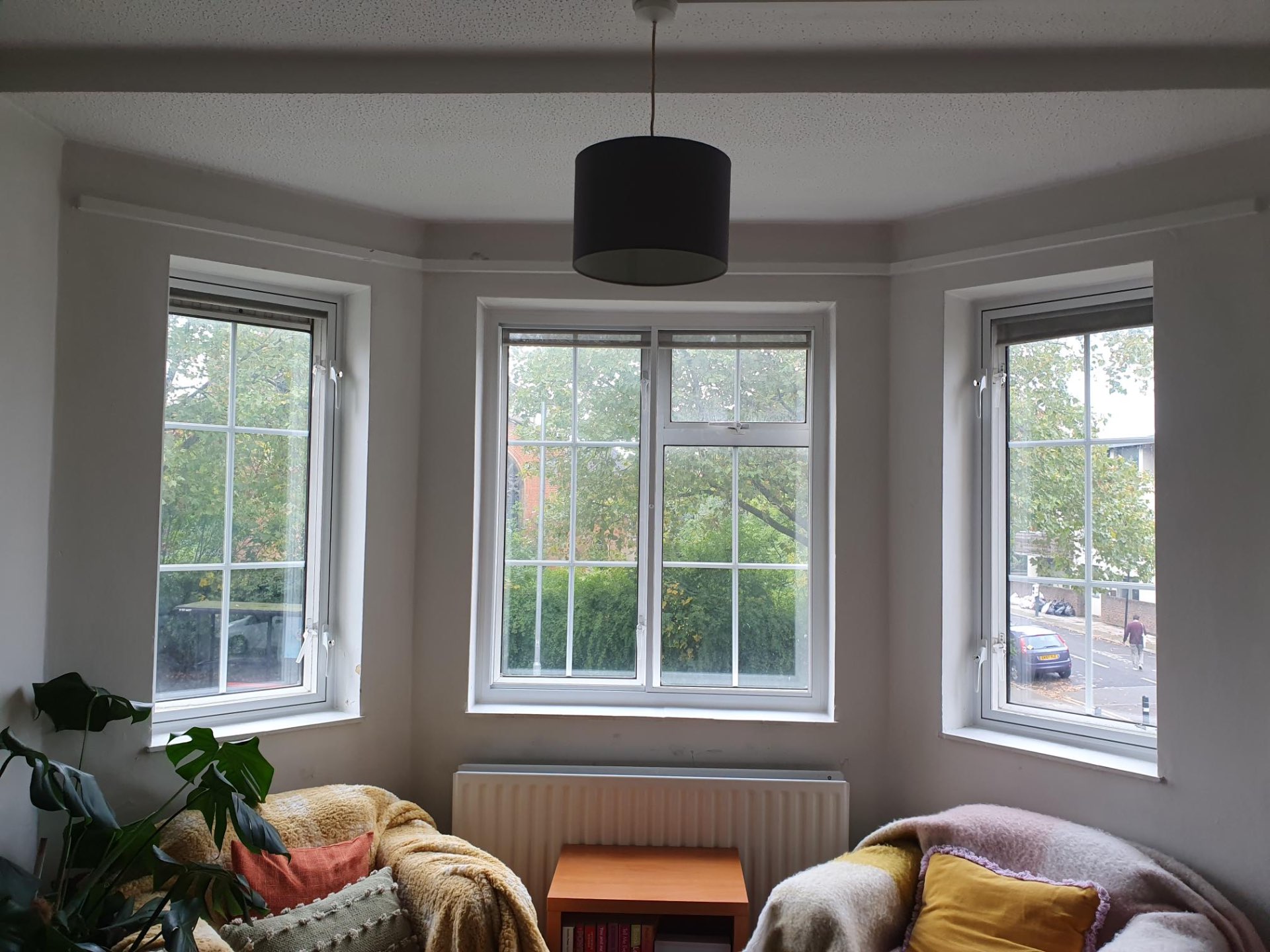
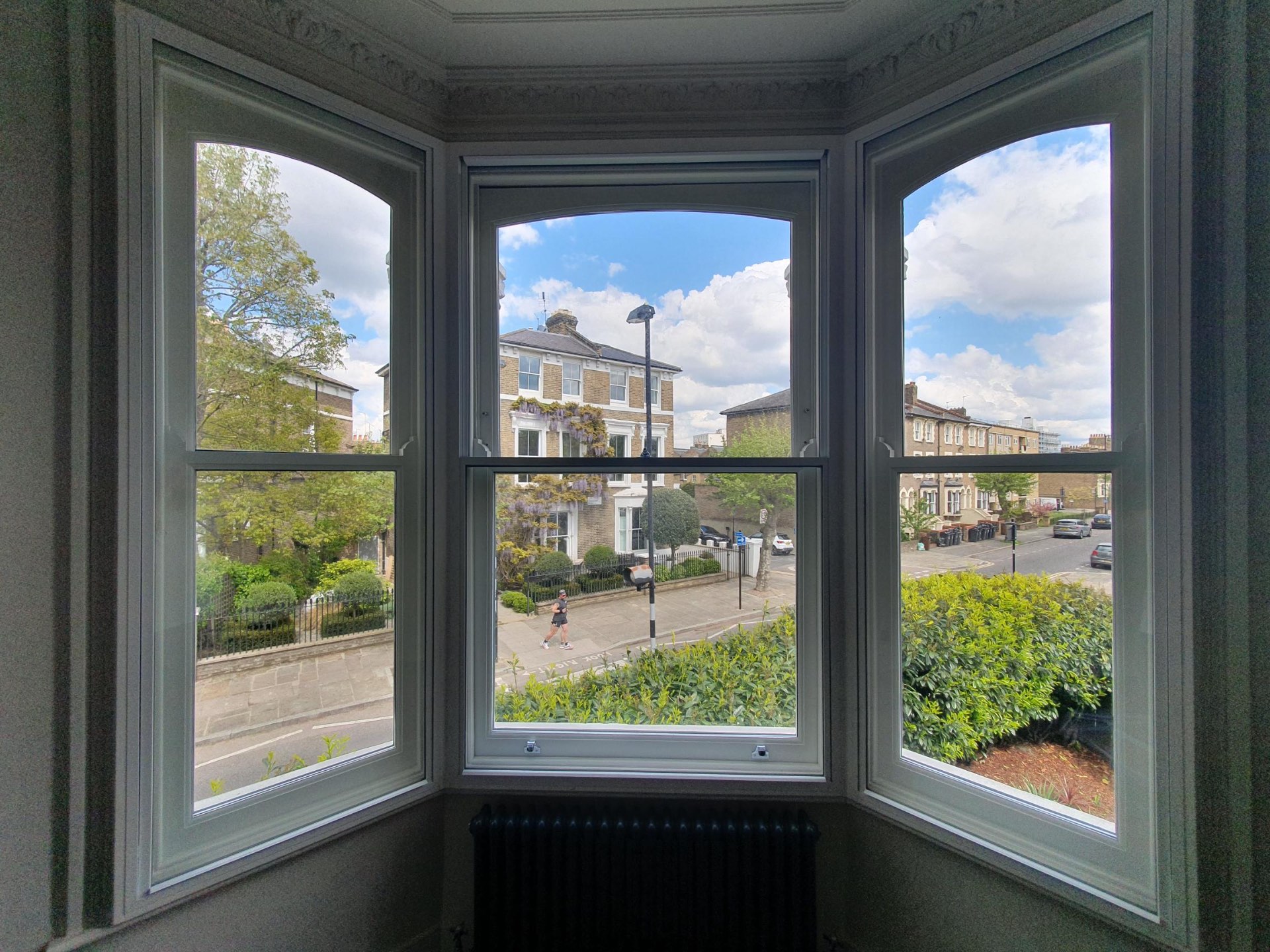
The most common Victorian configuration features a flat front panel with two side panels at 90° angles. Found throughout London's Victorian terraces, these rectangular projections typically house three large sash or casement windows.
- Three large panels
- 90° angle returns
- Victorian terraces
- Sash or casement windows
Canted Bay Windows (135° Angles)
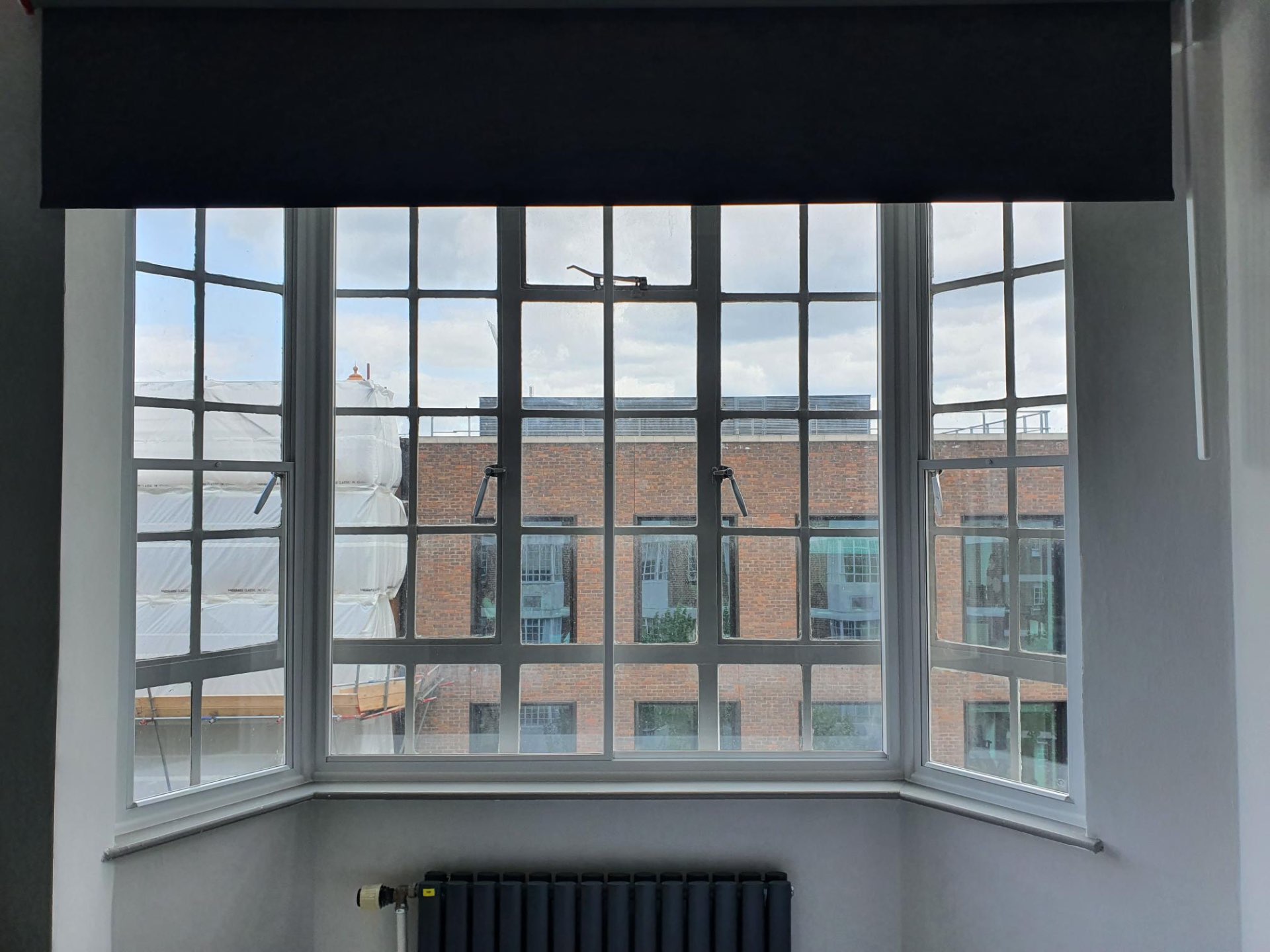
Popular in Edwardian properties, canted bays feature elegant angled facets at 135°, creating softer, more graceful proportions. These often have five panels - three front facets with two angled returns.
- Five panels typical
- 135° angle returns
- Edwardian properties
- Elegant proportions
Bow Windows (Curved)
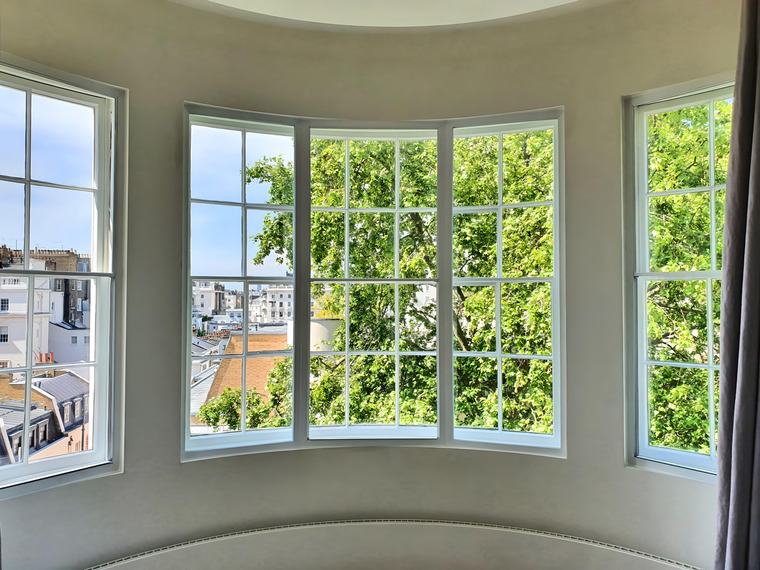
Less common but elegant, bow windows create a continuous curved glass projection. Popular in Georgian-influenced properties and select Victorian homes, these require specialized curved secondary glazing solutions.
- Continuous curve
- Georgian influence
- Specialized solutions
- Premium elegance
Comprehensive Benefits of Bay Window Secondary Glazing
Transform Your Cold Bay Zone
Secondary glazing eliminates the cold spot phenomenon that makes bay areas uncomfortable. Your bay window seat becomes a warm, usable space year-round - often becoming the family's favorite spot for reading, relaxation, or morning coffee.
Dramatic Thermal Efficiency Improvements
Professional secondary glazing can reduce heat loss through bay windows by 45-60%, with typical annual savings of £400-£800 per bay depending on size and current glazing. Understanding how air gap spacing works in bay window installations maximises performance. The large glass surface area of bays means proportionally greater savings compared to standard windows.
Exceptional Acoustic Performance
Bay windows can achieve exceptional acoustic performance with the right glazing specification. Bay windows face the street, capturing maximum traffic noise, sirens, and urban sounds. Quality secondary glazing with acoustic glass can reduce noise levels by 70-80%, transforming noisy front rooms into peaceful sanctuaries. See our sound transmission guide for detailed specifications.
Heritage Preservation
Secondary glazing preserves your authentic Victorian or Edwardian bay completely. Installed internally, it's invisible from the street, maintaining your property's period character and street scene contribution while delivering modern performance. Ideal for conservation areas.
Condensation Prevention
Secondary glazing prevents condensation in bay window reveals by keeping the inner glass surface warmer. This eliminates moisture buildup, protects timber frames from rot, and prevents mould growth in the bay area.
Enhanced Security for Ground-Floor Bays
Enhanced security for ground-floor bays is critical. Secondary glazing with laminated glass creates an additional barrier, adding valuable time and deterrence against break-ins through vulnerable street-facing windows.
For detailed bay window installation processes, including complex multi-panel configurations and curved bay solutions, see our bay window installation guide. It covers everything from initial measurements to final fitting for both traditional and contemporary bay window styles.
Configuration Options for Different Bay Types
Panel-by-Panel Installation
Each bay panel receives its own custom secondary glazing unit, precisely fitted to match the bay's angles. This approach maintains access to individual primary windows while ensuring perfect alignment across the entire bay.
Operating Styles:
Hinged Units
Mirror your existing window operation, opening independently for full access to primary windows
Vertical Sliding
Perfect for sash window bays, maintaining the authentic sliding operation
Lift-Out Panels
Cost-effective removable units ideal for rarely-opened windows
Fixed Units
Maximum thermal and acoustic performance for never-opened panels
Bay Window Seat Preservation
Secondary glazing installs within the window reveals, ensuring your bay window seat remains fully accessible and usable. The installation doesn't obstruct seating areas, storage, or existing shutters and blinds.
Professional Installation Process
Initial Assessment
Our specialists visit to assess your bay configuration, measure precise angles, and discuss your specific requirements and heritage considerations.
Detailed Survey
Exact measurements of each panel and bay angles ensure perfect fitting. We photograph configurations and assess reveal depths for optimal installation.
Custom Manufacturing
Each unit is custom-made to your exact bay measurements with precision angle adaptors. Manufacturing typically takes 4-6 weeks.
Expert Installation
Professional teams typically complete bay installations in 1-2 days, installing panel by panel with full operation testing and demonstration.
Investment and Returns
Typical Bay Window Costs
Compare to bay window replacement costs of £3,000-£10,000 per bay. Secondary glazing delivers 50-70% cost savings while preserving your irreplaceable period feature.
Return on Investment
£400-£800 Annual Savings
Per bay window in energy costs
4-7 Year Payback Period
Then pure savings for decades
20+ Year Lifespan
Continued savings with minimal maintenance
Real-World Success Stories
Victorian Terrace, North London
Challenge:
A family with a 3-panel sash bay in their front living room was spending £420 monthly on winter heating bills. The bay area was too cold to use, despite being the room's most attractive feature.
Solution:
Vertical sliding secondary glazing with acoustic glass (£1,850)
Results:
58%
Energy bill reduction
£2,928
Annual savings
75%
Street noise reduction
"The bay window seat is now the family's favorite spot"
Edwardian Villa, West London
Challenge:
A Grade II listed 5-panel canted bay in a master bedroom faced a busy A-road, disrupting sleep nightly. Planning permission for replacement was refused.
Solution:
Secondary glazing with high-performance acoustic glass (£2,650)
Results:
78%
Noise reduction
62%
Heating cost reduction
100%
Conservation compliance
"Satisfied conservation requirements while delivering peaceful sleep"
Secondary Glazing vs Bay Window Replacement
| Factor | Secondary Glazing | Bay Replacement |
|---|---|---|
| Cost | £1,200-£3,200 | £3,000-£10,000+ |
| Heritage | Preserves authentic bay | Destroys period feature |
| Installation Time | 1-2 days | 1-2 weeks |
| Planning Required | Usually no | Often required |
| Reversible | Yes | No |
| Performance | Excellent | Excellent but costlier |
Clear Winner: Secondary glazing delivers the best combination of heritage preservation, excellent performance, and value for money for bay windows.
Glass Options and Specifications
4mm Standard Glass
- Basic toughened safety glass
- Noise reduction up to 29dB
- Suitable for quiet residential areas
- Cost-effective solution
- Standard security features
6.4mm Entry-Level Acoustic Glass
- Entry-level laminated glass
- Noise reduction up to 32dB
- Good for suburban areas
- Enhanced security features
- Basic noise reduction properties
6.8mm Enhanced Entry Glass
- Enhanced entry-level acoustic glass
- Noise reduction up to 33dB
- Suitable for urban residential areas
- Improved security features
- Better noise reduction capabilities
8.8mm Medium Performance Glass
- Medium-performance acoustic laminated glass
- Noise reduction up to 35dB
- Ideal for properties near busy roads
- Enhanced security features
- Perfect for urban environments
10.8mm High Performance Glass
- High-performance acoustic laminated glass
- Noise reduction up to 38dB
- Suitable for city centers
- Superior sound dampening
- Excellent for properties near railways
12.8mm Premium Glass
- Premium acoustic laminated glass
- Maximum noise reduction up to 41dB
- Ideal for high-noise environments
- Ultimate security protection
- Perfect for properties near airports
Frequently Asked Questions
Transform Your Beautiful Bay Windows
Transform your beautiful but impractical bay windows into warm, comfortable, energy-efficient spaces while preserving their authentic Victorian or Edwardian character. Contact our bay window specialists for a free assessment and discover how secondary glazing can restore your bay to its rightful place as your home's most cherished feature.