Noise Reduction Solutions for Homes Near Busy Roads in Clapham
Transform your Clapham home from noisy to peaceful with our specialist secondary glazing designed to combat persistent traffic noise from the A3, Clapham High Street, and surrounding busy roads.
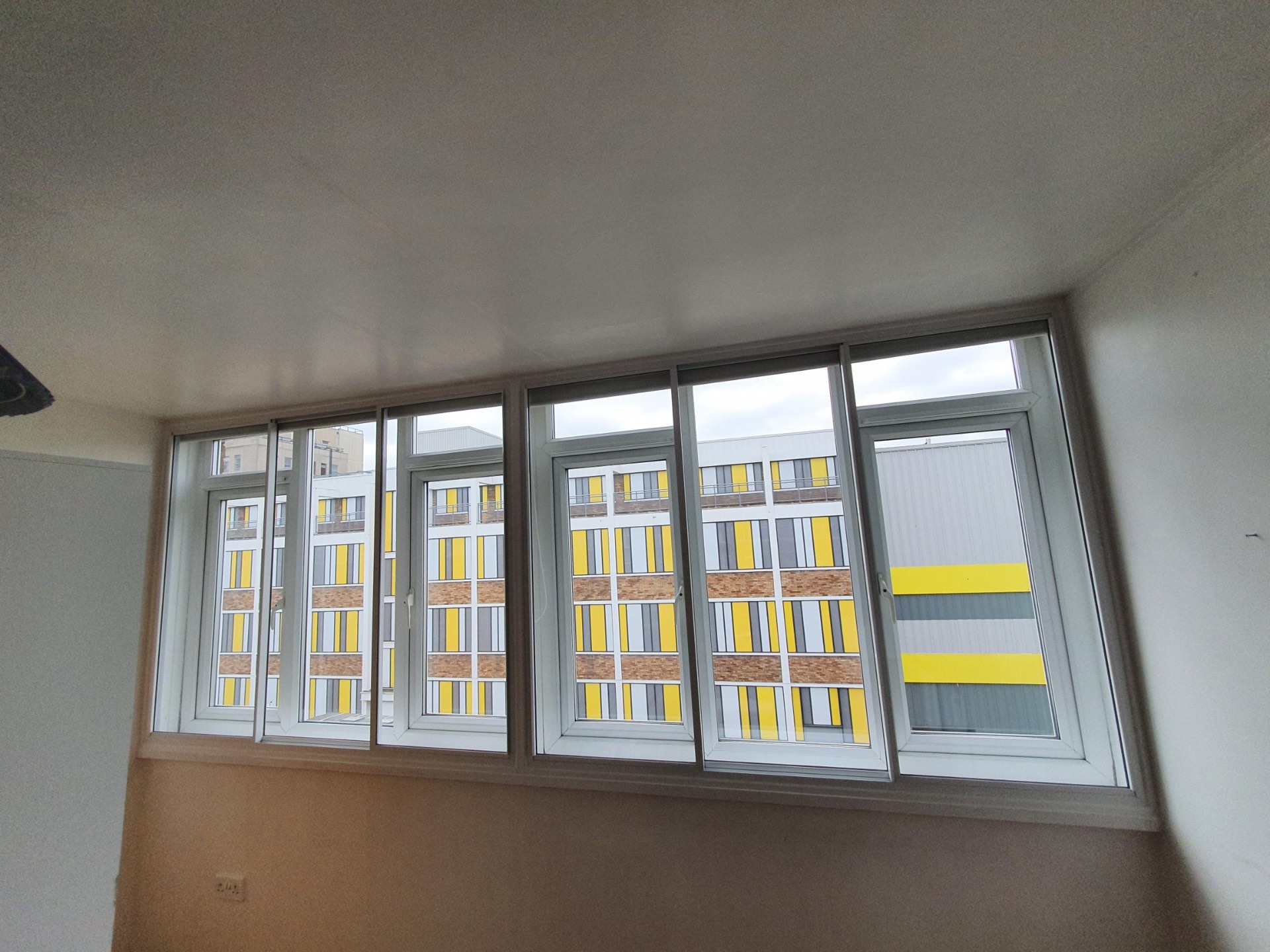
Understanding Traffic Noise in Clapham
Clapham's strategic location in South London means many properties face constant traffic noise from major arterial routes. The A3 (Clapham High Street), Wandsworth Road, and numerous bus routes create a persistent acoustic challenge that can significantly impact quality of life, sleep patterns, and property values.
Traffic noise in Clapham is particularly challenging because it combines multiple frequency ranges: low-frequency rumble from heavy vehicles and buses, mid-frequency engine noise from constant flow traffic, and high-frequency sounds from acceleration, braking, and tire noise on wet roads.
The Science of Traffic Noise Reduction
Low-Frequency Traffic Challenges
The persistent low-frequency rumble from buses and HGVs on Clapham's roads is particularly difficult to block with standard single glazing. These sounds require specialist acoustic treatment with asymmetric glass configurations and optimized air gaps to achieve effective reduction.
Decibel Reduction Expectations
Typical Noise Levels vs. Our Solutions:
- Clapham High Street traffic: 70-75 dB → Reduced to 45-50 dB (25-30 dB reduction)
- Residential side roads: 60-65 dB → Reduced to 35-40 dB (25 dB reduction)
- Bus route noise: 75-80 dB → Reduced to 50-55 dB (25-30 dB reduction)
- Night-time traffic: 55-60 dB → Reduced to 30-35 dB (25 dB reduction)
Specification for Clapham Properties
Clapham's housing stock is dominated by Victorian and Edwardian terraces with tall vertical sliding sashes, many of them in the Clapham Common, Old Town and Grafton Square conservation areas. Those large single-glazed openings are the weakest acoustic element of the façade, typically delivering only 25–28dB of reduction. Secondary glazing addresses them without altering the street elevation, which is why it is the specification route conservation officers in Lambeth and Wandsworth accept.
| Location | Dominant noise source | Specification | Indicative Rw |
|---|---|---|---|
| Clapham High Street / A3 | Bus and HGV low-frequency rumble | 10.8mm Stadip Silence, 150mm cavity | 48–54dB |
| Wandsworth Road / Cedars Road | Continuous arterial traffic | 8.8mm acoustic laminate, 100mm cavity | 42–46dB |
| Abbeville Village side streets | Intermittent local traffic | 6.4mm laminate, 100mm cavity | 38–41dB |
| Clapham Common frontages | Evening and weekend activity noise | 6.4mm laminate with low-E coating | 38–41dB |
Meeting BS 8233 in a Clapham bedroom
BS 8233:2014 sets a 30dB LAeq,8hr night-time bedroom target and 45dB LAmax for individual events such as a passing bus. A front bedroom on Clapham High Street commonly measures 68–72dB free-field at the façade, so roughly 40dB of façade reduction is required once the standard 3dB correction is applied. That is achievable with 8.8mm laminate, but where night buses drive the LAmax peaks we specify 10.8mm acoustic laminate and a deeper cavity to buy the extra margin.
Detailing for Victorian reveals
- Deep original reveals allow 100–150mm cavities without projecting into the room.
- Asymmetric pane thicknesses avoid coincidence dip alignment with the original 3–4mm glass.
- Continuous compressible perimeter seals — a 1% air gap can cost 10dB of measured performance.
- Acoustic-attenuated trickle vents preserve Part F background ventilation on habitable rooms.
- Slimline white or heritage-bronze frames align with existing sash meeting rails for a discreet finish.
Specialist Solutions for Other London Areas
Each London location presents unique acoustic challenges. Discover our targeted solutions:
Victorian Terraces - Islington
Conservation-approved solutions for period properties maintaining historical character.
Aircraft Noise - Heathrow
Specialized glazing for persistent aircraft noise near London's busiest airport.
Railway Noise - King's Cross
Combat train noise with solutions designed for railway environments.
Urban Living - Shoreditch
24/7 urban noise solutions for London's creative and nightlife districts.
Commercial - Canary Wharf
Office acoustic solutions for London's financial district buildings.
Listed Buildings - Kensington
Heritage-sensitive glazing for protected buildings in conservation areas.
Related acoustic resources
Sound insulation service
Acoustic survey, specification and installation.
Acoustic glazing
Rw and Ctr performance by glass build-up.
Best acoustic glass compared
Which laminate suits which noise source.
Air gap performance
Why 100mm+ cavities outperform double glazing.
South London coverage
Boroughs and neighbourhoods we cover nearby.
Compliance hub
Conservation area and Part F guidance for Lambeth.
Ready for Peace and Quiet in Clapham?
Get a free acoustic survey and tailored quotation for secondary glazing designed specifically to combat Clapham's traffic noise challenges.