Secondary Glazing Sound Transmission Guide
Understanding how sound travels through windows and how secondary glazing can effectively reduce noise pollution in your home or office.
How Sound Travels Through Windows
Sound travels as a wave through air, causing vibrations when it hits a surface like a window. Single-pane windows offer minimal resistance to these sound waves, allowing them to pass through with little reduction in intensity.
When sound waves hit a window, three things happen:
- Some sound is reflected back
- Some sound is absorbed by the glass
- Some sound passes through to the other side
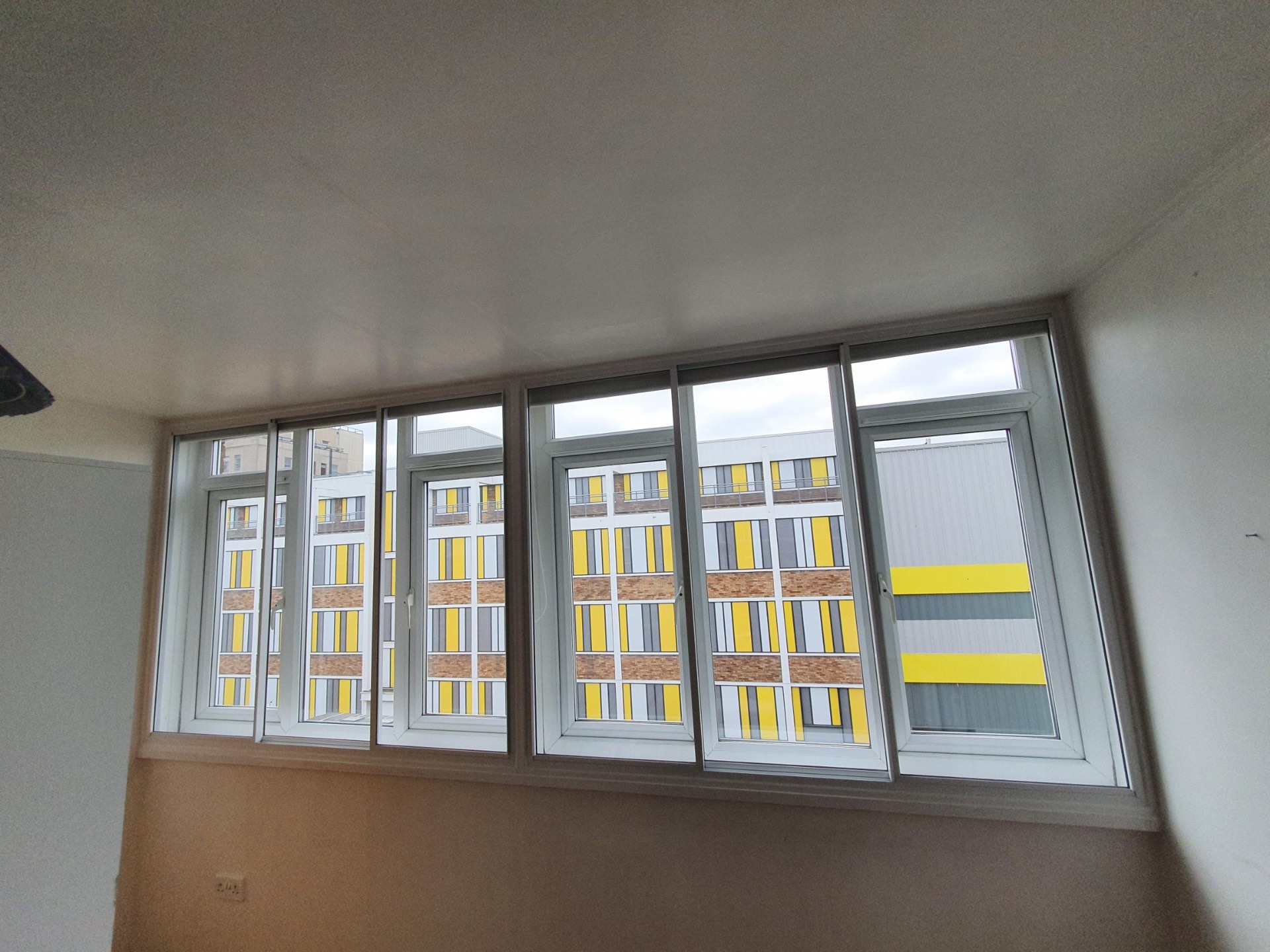
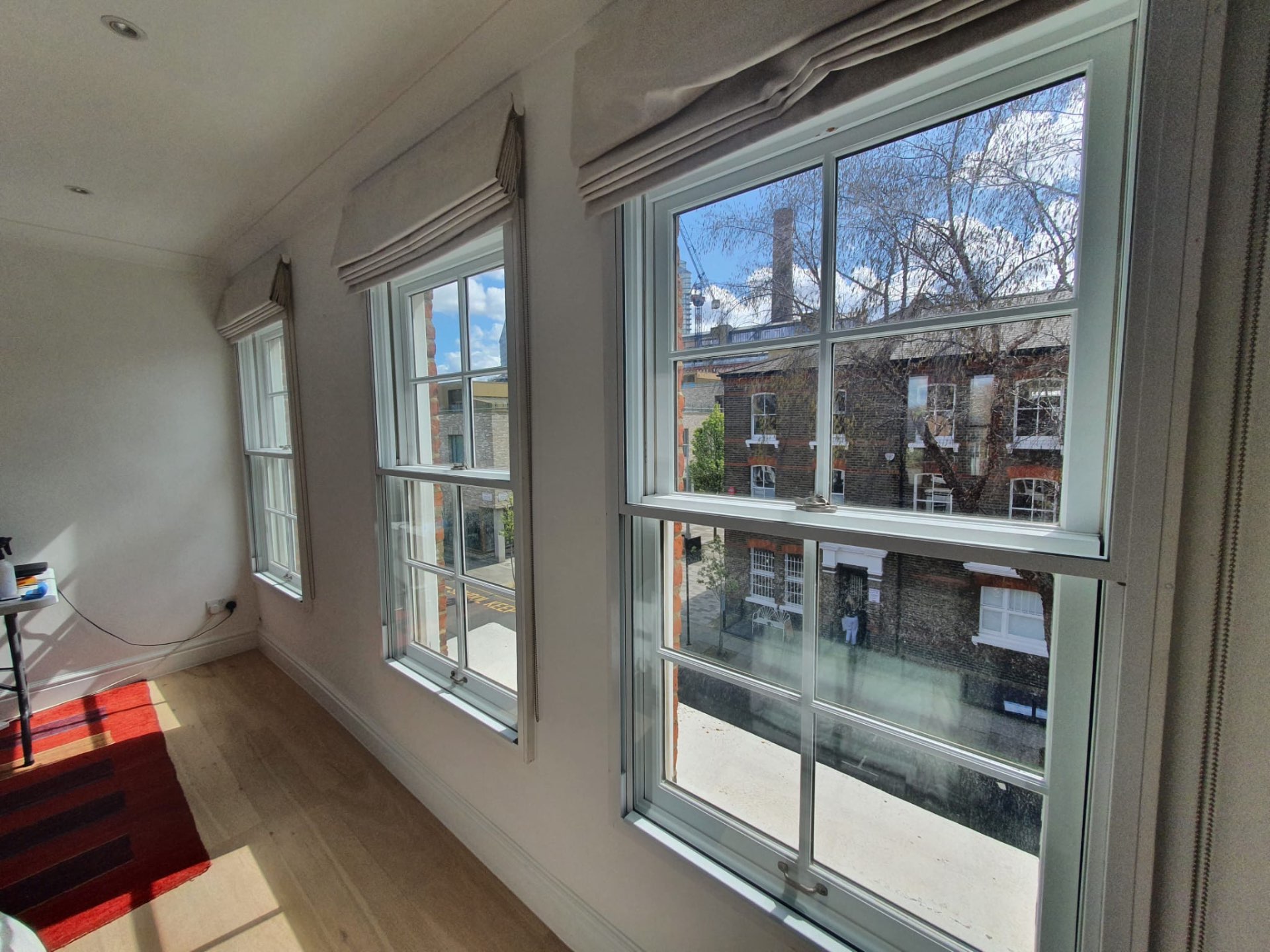
Standard windows are particularly vulnerable to sound transmission due to their relatively thin glass and the direct pathway they provide between outside and inside environments.
Factors Affecting Sound Transmission
- Glass mass: Heavier, thicker glass absorbs more sound energy
- Air gaps: Larger gaps between panes disrupt sound wave continuity
- Different glass thicknesses: Using varying thicknesses prevents resonance
- Lamination: Acoustic interlayers dampen vibrations
- Edge sealing: Proper sealing prevents sound leakage around frames
- Frame quality: Solid frames transmit less vibration
How Secondary Glazing Reduces Noise
The Science Behind Acoustic Secondary Glazing
Secondary glazing creates a highly effective sound barrier through multiple mechanisms:
- Air gap principle: The substantial air gap (typically 100-200mm) between primary and secondary glazing disrupts sound wave transmission
- Mass-air-mass resonance: The combination of two glass panes with an air space creates a system that's difficult for sound to penetrate
- Acoustic decoupling: Independent frames prevent vibration transfer between panes
- Laminated glass: Special acoustic laminated glass incorporates sound-damping PVB interlayers
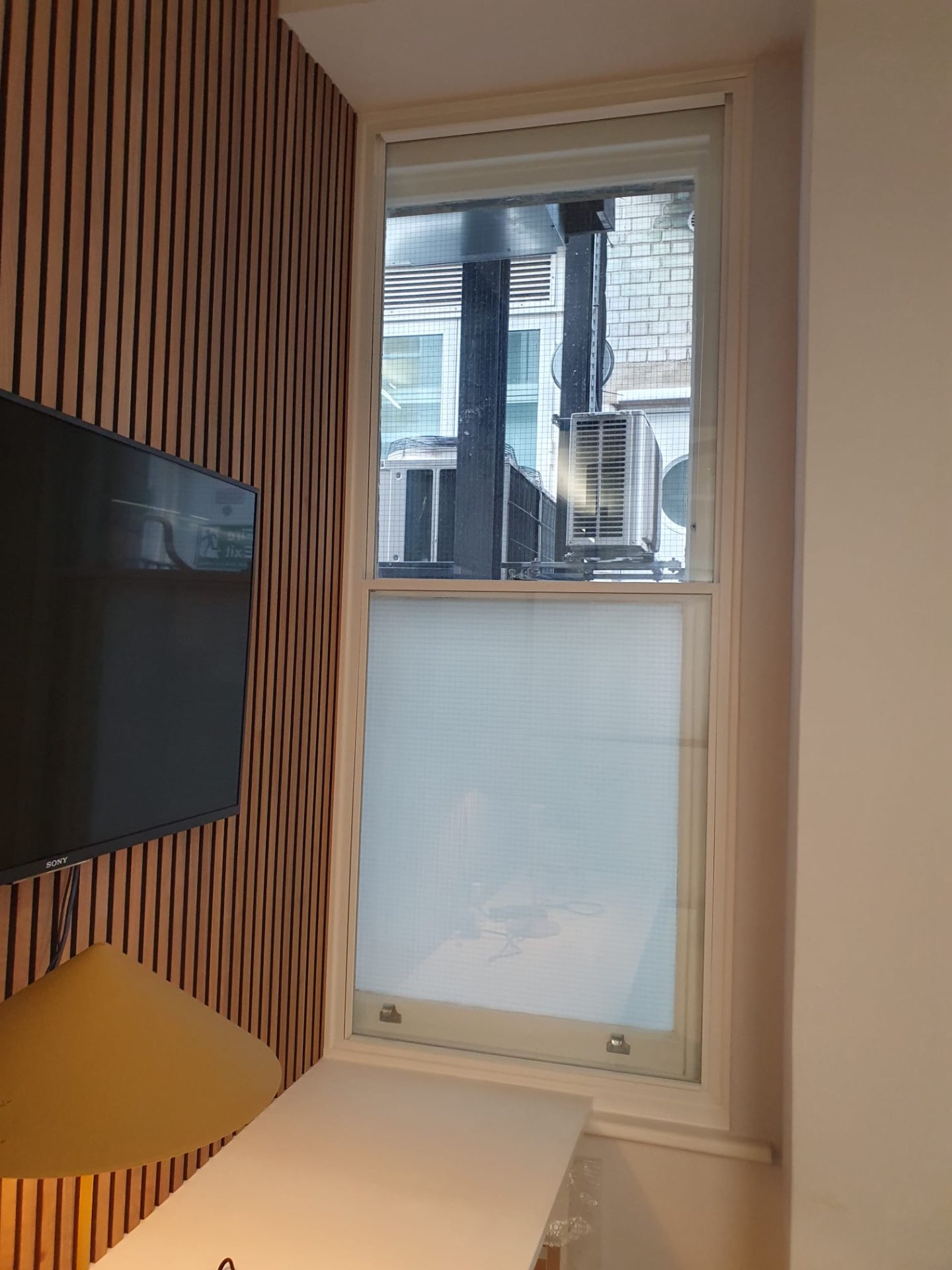
Secondary glazing is particularly effective at reducing noise because it adds another barrier with a significant air gap between the panes. This air gap is crucial - it's much more effective than the narrow gap in double glazing.
When properly installed with acoustic glass, secondary glazing can reduce noise levels by up to 45-48 dB, which means that loud external noise like heavy traffic or trains would be reduced to a whisper-like level inside your property.
Technical Insight
A 10 dB reduction in sound equates to a perceived 50% reduction in loudness to human ears. This means our systems providing 45-48 dB reduction can make even the loudest urban environments feel peaceful and quiet.
What is a Decibel (dB)?
A decibel (dB) is a unit used to measure the intensity of sound. The decibel scale is logarithmic, not linear, which means that an increase of 10 dB represents a sound that is 10 times more intense or about twice as loud to human ears.
Whisper (20 dB)
Normal conversation (60 dB)
Heavy traffic (80 dB)
Motorcycle (95 dB)
Rock concert (110 dB)
The human ear can detect sounds from 0 dB (threshold of hearing) to about 140 dB (threshold of pain).
Sound Transmission Class (STC)
Sound Transmission Class (STC) is a rating that indicates how well a building element (such as a window) blocks sound. The higher the STC rating, the better the element is at reducing sound transmission.
| STC Rating | What You Can Hear |
|---|---|
| 20-25 | Normal speech can be heard and understood |
| 30-35 | Loud speech can be heard but not understood |
| 40-45 | Loud speech is barely audible |
| 50+ | Very loud sounds (shouting, musical instruments) are barely heard |
Single glazed windows typically have an STC rating of 26-28, while our premium acoustic secondary glazing can achieve ratings of 45-48 when properly installed.
Common Noise Sources and Their dB Levels
| Noise Source | Typical dB Level | Perceived Loudness |
|---|---|---|
| Rustling leaves | 20 dB | Just audible |
| Quiet residential area at night | 30-40 dB | Very quiet |
| Normal conversation | 60 dB | Comfortable hearing level |
| Busy office | 70 dB | Moderately loud |
| City traffic (from inside car) | 80-85 dB | Very loud, annoying |
| Motorcycle, lawn mower | 90-95 dB | Very loud, hearing damage after prolonged exposure |
| Subway train, car horn | 100 dB | Uncomfortably loud |
| Rock concert, chainsaw | 110-120 dB | Extremely loud, pain threshold begins |
Acoustic Solutions for Your Property
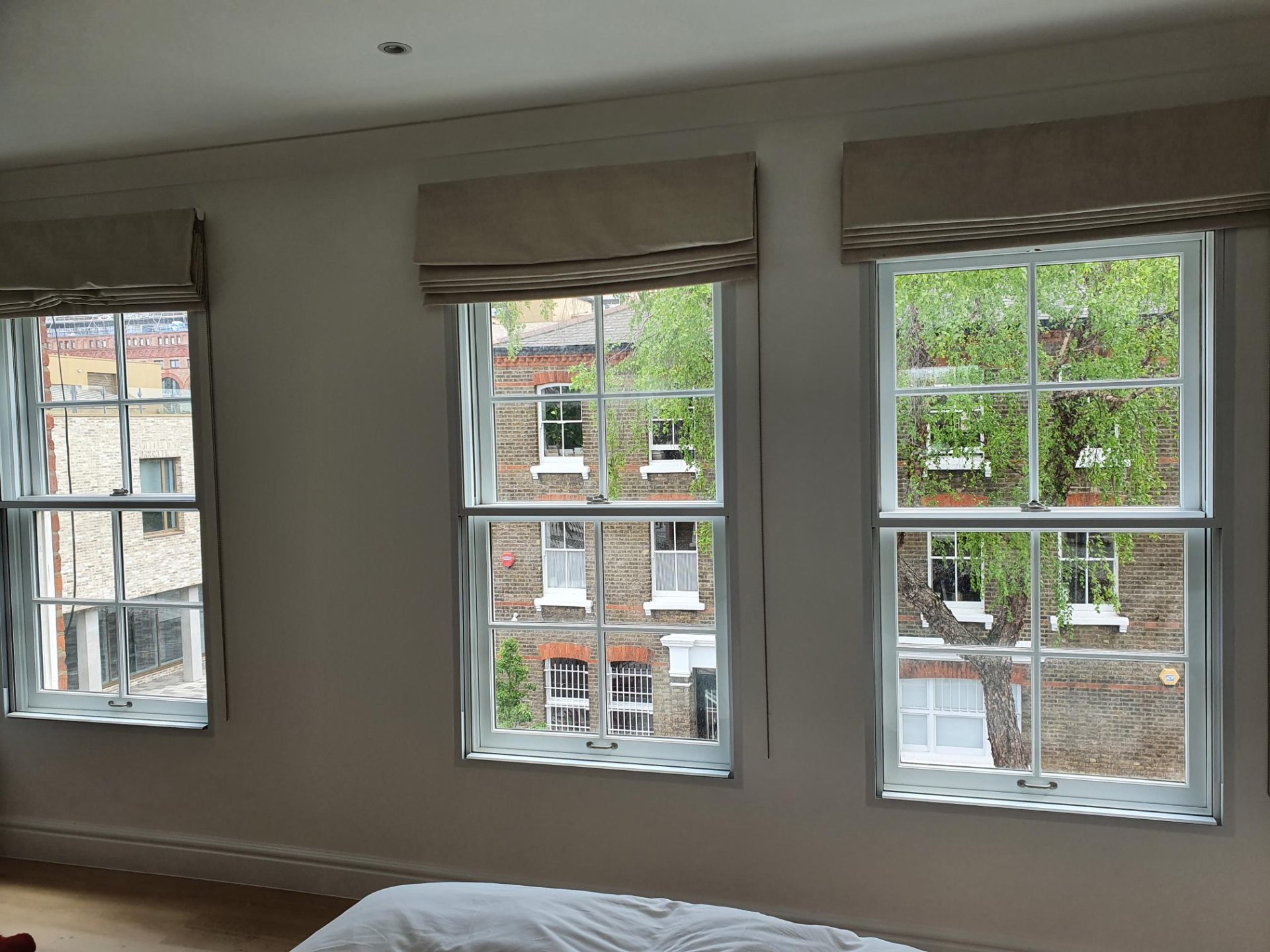
Recommended Acoustic Solutions
- For urban homes near busy roads:Acoustic Secondary Glazing Windows
- For properties near railways or flight paths:Premium Acoustic Glazing with 12.8mm acoustic laminated glass
- For listed buildings with noise issues:Heritage Solutions with acoustic enhancements
Next Steps
Understanding your specific noise challenges is the first step to creating a quieter environment. Our acoustic specialists can:
- Conduct a professional sound assessment at your property
- Recommend the optimal acoustic solution based on your noise issues
- Provide a detailed quotation for installation
- Install high-performance acoustic secondary glazing with minimal disruption
Noise Reduction in Practice
When we specify a noise reduction of 45 dB for our premium acoustic glazing solutions, here's what that means in practice:
The human perception of sound is subjective, but as a rule of thumb, a 10 dB reduction feels like a halving of loudness. This means that our 45 dB reduction solutions can make even the noisiest environments feel dramatically quieter.
Acoustic Performance Metrics & Standards
Sound transmission through glazing is quantified using the weighted sound reduction index Rw, derived from third-octave laboratory measurements between 100 Hz and 3,150 Hz under BS EN ISO 10140-2:2010. For real-world façade specification, the spectrum adaptation terms C (pink-noise / speech-spectrum) and Ctr (traffic-spectrum) are appended — for example, Rw (C; Ctr) = 45 (-1; -5) dB. The Ctr correction is the critical figure for road, rail, and aircraft noise, where low-frequency content dominates.
Specifying to BS 8233:2014 requires designers to convert laboratory Rw values to a calculated façade attenuation Dw under BS EN 12354-3, accounting for flanking transmission, façade area, and reverberation time of the receiving room. A typical conversion factor of -3 to -5 dB applies, meaning a 45 dB Rw laboratory unit delivers approximately 40 dB Dw in situ. This is critical when validating against the BS 8233 internal target of 35 dB LAeq (living rooms) under a 65 dB LAeq external level.
| Glazing System | Rw (C; Ctr) dB | External Noise Reduction | Compliance Target |
|---|---|---|---|
| Single 4mm Float | 29 (-1; -3) | ~25 dB on-site | Sub-standard |
| Standard DGU 4-16-4 | 31 (-1; -4) | ~27 dB on-site | Building Regs minimum |
| Single + 6.8mm Sec. (100mm) | 38 (-1; -4) | ~34 dB on-site | BS 8233 living rooms |
| Single + 10.8mm Sec. (150mm) | 45 (-1; -5) | ~40 dB on-site | BS 8233 bedrooms (good) |
| Single + 12.8mm Sec. (200mm) | 52 (-2; -7) | ~47 dB on-site | BB93 schools / hotels |
Coincidence Dip & Mass Law
All glass exhibits a coincidence-dip frequency at which bending-wave velocity in the pane matches the wavelength of incident sound, causing a localised drop in attenuation. For 4mm annealed float, this dip occurs at ~3,200 Hz; for 10.8mm Stadip Silence with acoustic PVB, the dip is shifted to ~1,200 Hz and attenuated by 6–8 dB through interlayer damping (per Saint-Gobain technical bulletin TB-018). Pairing dissimilar pane thicknesses across the cavity — for instance 4mm primary with 10.8mm secondary — separates the two coincidence dips, eliminating the resonance valley that would otherwise compromise BS 8233 compliance.
Next: Discover Practical Noise Reduction!
For a real-world look at how secondary glazing technology cuts outside noise by up to 80%, see glass and air gap choices, performance stats, and tips for listed buildings.
Visit Secondary Glazing Noise Reduction →