The Silent Nursery: Why a 54dB Noise Reduction Is the Best Gift for Your New Arrival
Published 18 February 2026 · 14 min read
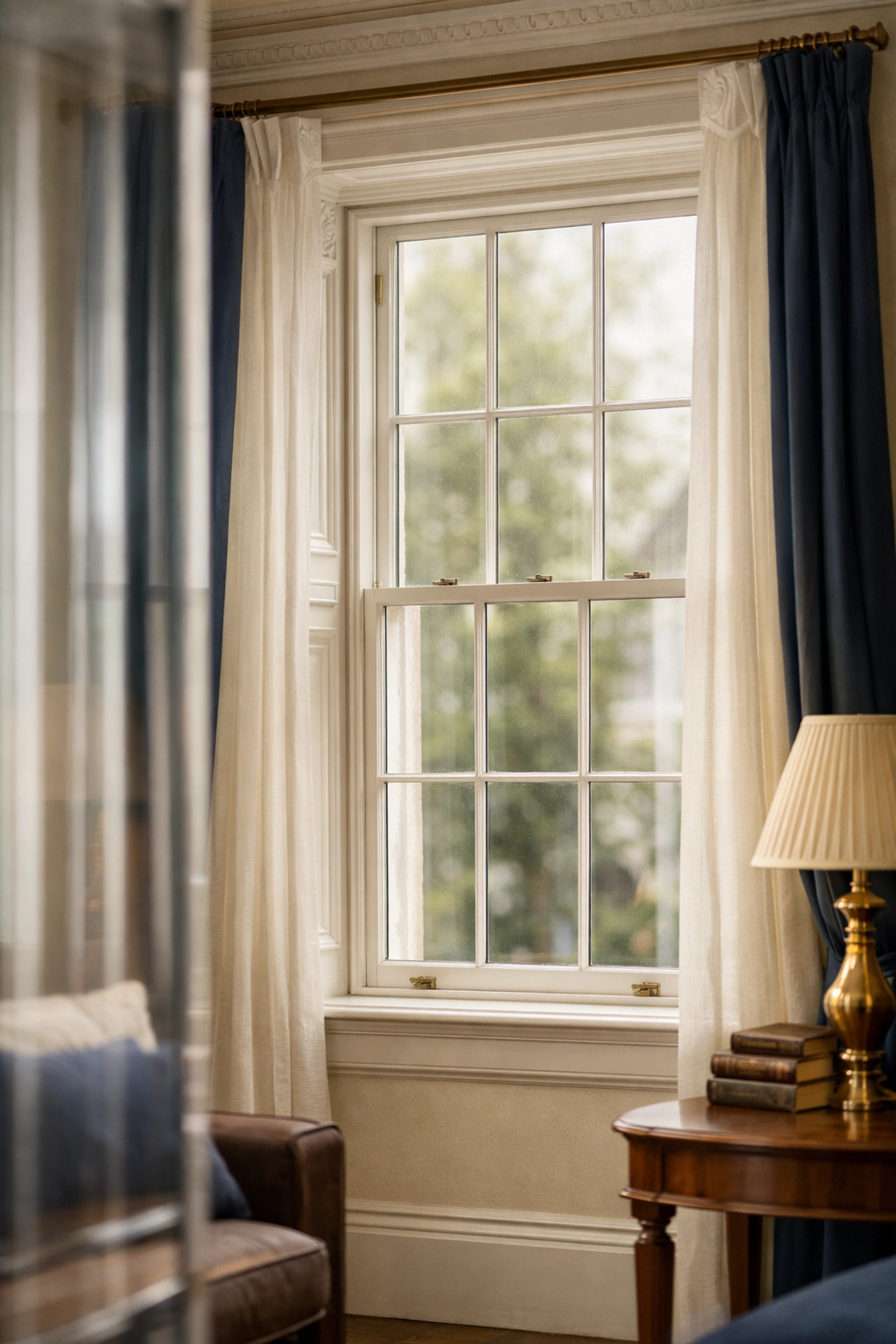
You've painted the walls, assembled the cot, and arranged the tiny clothes in neat little piles. Everything's perfect — until a bus rumbles past at 2am and your newborn jolts awake. Sound familiar? If you live anywhere near a London main road, you already know that traffic noise and infant sleep don't mix.
Here's the thing most new parents don't realise: the World Health Organisation recommends night-time noise levels below 30 decibels for healthy sleep. A typical London street sits at 70-80dB. That's a 40-50dB gap you need to close. Standard double glazing knocks off about 25-30dB. Secondary glazing with 10.8mm acoustic laminate glass? That delivers a full 54dB reduction. That's the difference between "the baby woke up six times" and "wait, did the baby actually sleep through?"
Why Babies Are So Sensitive to Low-Frequency Noise
Lighter Sleep Cycles
Newborns spend 50% of sleep in REM — the lightest, most easily disrupted phase.
Bus & Lorry Rumble
Low-frequency noise (under 250Hz) passes straight through standard glass. It's the hardest sound to block.
Cortisol Response
Noise disruption triggers stress hormones in infants, affecting development and daytime mood.
Research from the London School of Hygiene shows that children in noisier London boroughs — think Hackney, Islington, Camden — are significantly more likely to experience fragmented sleep patterns. It's not just about volume; it's about the type of noise. The deep rumble of a night bus or an HGV operates at frequencies that standard glazing barely touches.
How 10.8mm Acoustic Glass Creates a Silent Room

Our go-to specification for nursery soundproofing is 10.8mm Stadip Silence acoustic laminate glass paired with a 100mm air gap. Here's why this combination is so effective:
- The PVB interlayer — a special acoustic film sandwiched between two glass layers — absorbs vibrations rather than transmitting them. It's particularly effective against the 100-500Hz range where traffic rumble sits.
- The 100mm air gap between your original window and the secondary pane acts as a decoupled buffer. Sound waves lose energy crossing this cavity because air is a poor conductor of vibration.
- Mass Law principle — heavier glass = more sound blocked. At 10.8mm, you're getting nearly three times the mass of standard 4mm glass.
The result? A nursery that drops from 75dB (busy London road) to around 21dB (quieter than a library). Your baby sleeps. You sleep. Everyone wins.
What London Parents Are Saying
"We live on a bus route in Islington. Before the secondary glazing, our daughter would wake up 4-5 times a night. After installation, she started sleeping through within a week. It genuinely changed our lives."— Sarah & James, Victorian terrace, Islington N1
"Our flat overlooks the A40 in Shepherd's Bush. The nursery was unusable before. Now it's the quietest room in the house. Worth every penny."— Tom, Edwardian conversion, W12
What If You're in a Listed Building or Conservation Area?
Good news: secondary glazing is almost always approved for listed buildings because it's fully reversible and doesn't alter the external appearance. You don't need planning permission in most cases. Even in strict conservation areas like Kensington & Chelsea or Richmond, conservation officers consistently approve well-designed secondary glazing because it protects original windows rather than replacing them.
Our slim aluminium frames (just 20mm sightline) are virtually invisible from inside the room, and completely invisible from outside. Your Georgian sash windows look exactly the same — they just perform dramatically better.
What Does Nursery Soundproofing Cost?
For a typical London nursery with 1-2 windows, you're looking at:
Single Window
£350 – £500
With 10.8mm acoustic laminate glass and horizontal slider mechanism
Two Windows
£650 – £950
Including installation, usually completed in half a day
Compare that to a year of broken sleep, and it starts to look like the best investment you'll make as a new parent. Check our full 2026 cost guide for detailed pricing.
Ready to Give Your Baby the Gift of Silence?
Get a free, no-obligation survey and quote for acoustic secondary glazing. We'll visit your nursery, measure up, and recommend the right solution.
Request a Free QuoteRelated Expert Guides
Acoustic Glazing Guide
10.8mm Stadip Silence glass & 100mm air gaps
ReadHeritage & Listed Buildings
Conservation-approved, fully reversible
ReadEPC & Energy Efficiency
Cut heating bills 15-30%
ReadCondensation & Mould
99% condensation reduction
ReadBrowsing article on page 2 of 3. Back to blog archive.