Acoustic Secondary Glazing: The Ultimate Guide to Soundproofing London Period Homes
Living in a beautiful Georgian townhouse in Chelsea or a Victorian terrace in Kensington comes with undeniable charm. But let's be honest, those stunning original sash windows weren't designed to handle the relentless noise of 21st-century London. Between the early morning traffic on the King's Road, the Heathrow flight path, and the constant hum of city life, even the most elegant period home can feel like it's under sonic siege.
The problem is that your typical soundproofing solutions, modern double glazing or complete window replacement, are often off the table. Whether you're in a conservation area or simply want to preserve the architectural integrity of your property, you need a solution that delivers serious noise reduction without compromising your home's heritage character.
That's where acoustic secondary glazing comes in. And not just any secondary glazing, we're talking about the high-performance stuff that actually works.
Why Standard Solutions Fall Short for Period Properties
If you've done any research into soundproof secondary glazing, you've probably come across DIY kits promising easy installation and decent results. Here's the reality: those kits are designed for garden offices and spare bedrooms, not for £2 million properties in Westminster.
The issue isn't just about aesthetics (though those plastic frames certainly don't belong near your original timber sashes). It's about performance. Most DIY secondary glazing uses thin glass, typically 4mm, and minimal air gaps. That might knock off a few decibels, but it won't give you the peaceful sanctuary you're paying for in one of London's prime postcodes.
Professional-grade acoustic secondary glazing is a different beast entirely. It's engineered specifically to combat the low-frequency rumble of buses on Sloane Street and the high-pitched whine of aircraft over Richmond Park. And it does this while remaining completely invisible from the street.
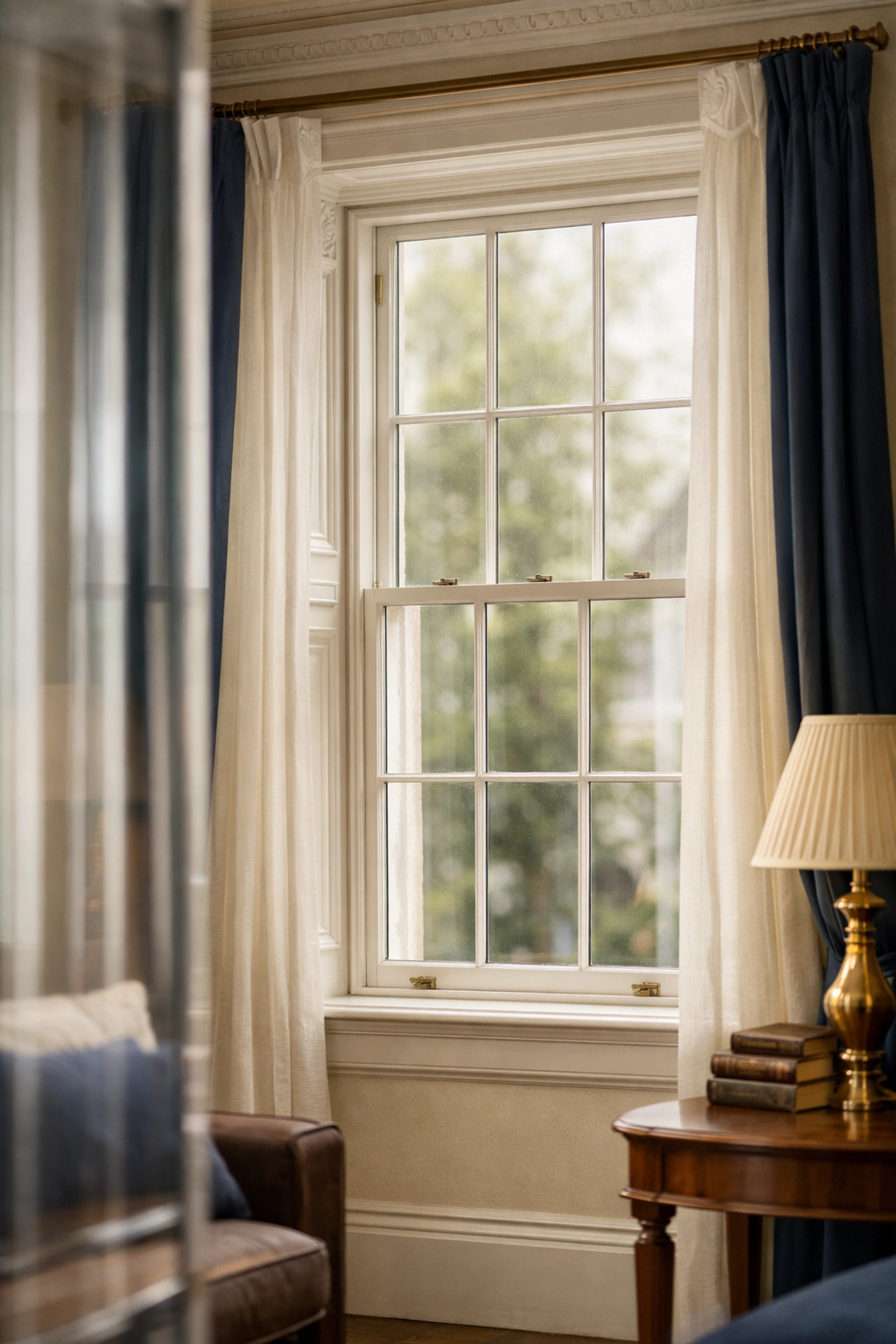
The Science of Silence: How 100mm Air Gaps Change Everything
The secret to effective noise reduction windows London residents actually notice comes down to two critical factors: the air gap and the glass specification.
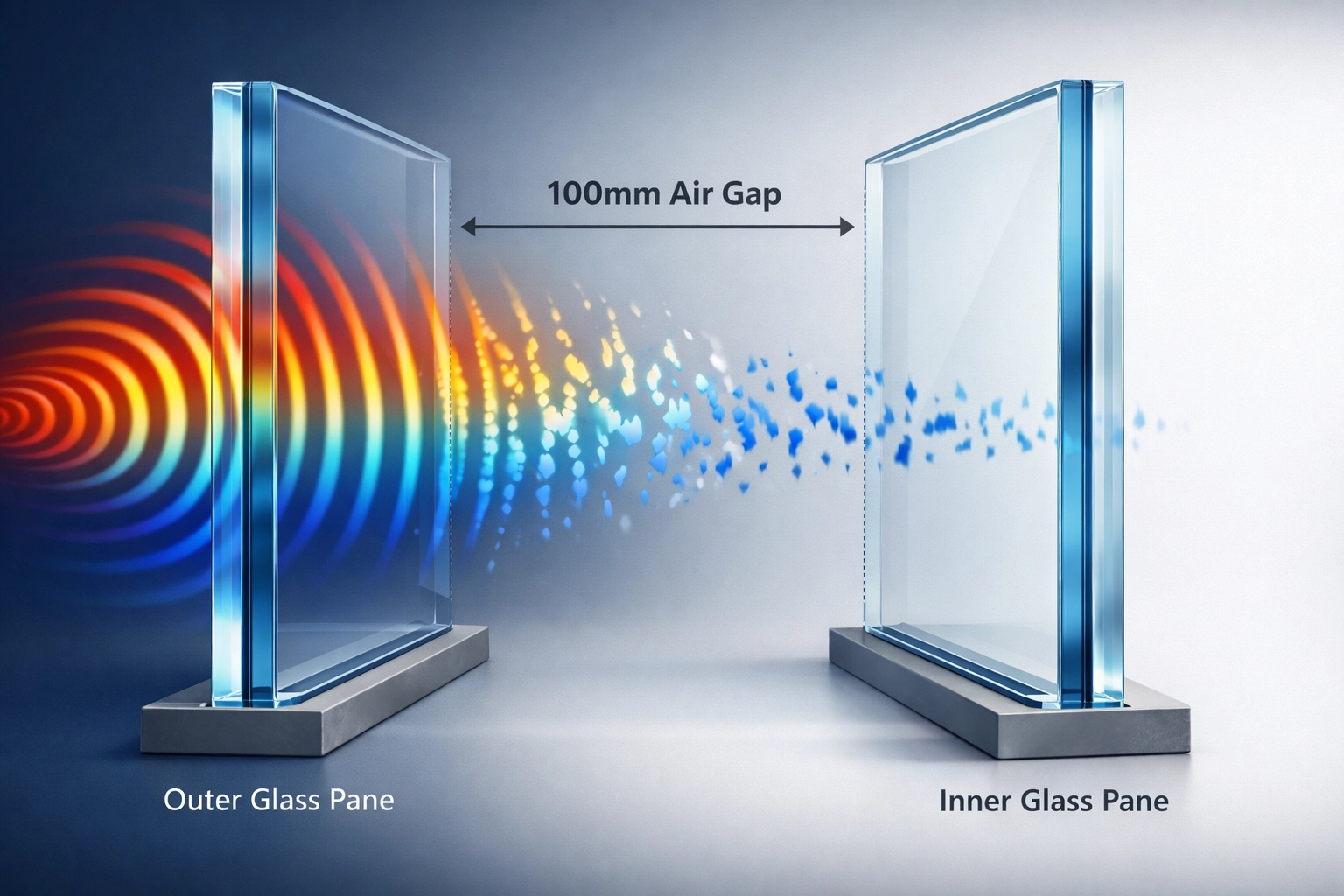
Standard double glazing, the kind you'd find in a new-build flat, typically has a 12-20mm gap between panes. Secondary glazing, when done properly, creates a 100mm cavity between your existing window and the new internal pane. This isn't just "more space." It's a fundamental shift in how sound waves behave.
Sound travels through vibration. When noise hits your original window, the glass vibrates and transmits that energy through to your room. With secondary glazing, those vibrations hit the first pane, then have to travel across 100mm of dead air space before reaching the second pane. During that journey, the sound waves lose energy, lots of it.
This is called acoustic decoupling, and it's why properly installed secondary glazing can achieve 70-80% noise reduction. In practical terms, that means the roar of traffic on Cromwell Road becomes a distant murmur. The 6am refuse collection that used to wake you up becomes a minor background presence you barely register.
But here's where it gets interesting: the air gap alone isn't enough. You need the right glass specification to complete the equation.
Sound Comparison
Experience the difference acoustic secondary glazing makes.
75 dB
London Traffic Noise
Buses, taxis, motorbikes — constant disruption
Disrupted Sleep
Can't Concentrate
Stress & Fatigue
Based on real measurements from London installations using 10.8mm Stadip Silence glass with 100mm air gap.
The 10.8mm Acoustic Laminate Advantage
Walk into any secondary glazing showroom and you'll see plenty of options. Most will offer 6.4mm laminated glass as their "acoustic upgrade." It's better than standard glass, sure. But if you're serious about soundproofing a period home in central London, you need 10.8mm acoustic laminate glass.
Specifically, we're talking about Stadip Silence, a specialized acoustic laminate that's become the gold standard for noise reduction in high-end residential properties. Unlike standard laminated glass, Stadip Silence uses a specially formulated PVB (polyvinyl butyral) interlayer that's specifically designed to absorb sound energy.
Think of it like this: regular laminated glass is designed primarily for safety, keeping the glass together if it breaks. Acoustic laminate is designed to dampen. The thicker interlayer acts like a shock absorber for sound waves, converting acoustic energy into a tiny amount of heat instead of letting it pass through.
The difference in real-world performance is substantial. Where 6.4mm laminate might give you 35-40dB of noise reduction, 10.8mm Stadip Silence can achieve 45-50dB reduction when combined with that critical 100mm air gap. To put that in perspective, 50dB reduction means traffic noise that was as loud as normal conversation becomes quieter than a whisper.
!Technical Specification
10.8mm Stadip Silence Glass
- • Specialized acoustic PVB interlayer
- • Converts sound energy into micro-thermal heat
- • 45–50dB noise reduction (vs 35–40dB for 6.4mm)
- • Gold standard for high-end residential properties
100mm Air Gap
- • 5–8× wider than standard double glazing
- • Acoustic decoupling effect
- • 70–80% total noise reduction
- • Also delivers 60% thermal insulation improvement
Why This Matters for Sash Windows
If you own a period property in London, there's a good chance you have original timber sash windows. These are beautiful, irreplaceable features, but they're also single-glazed, draughty, and acoustically about as effective as leaving your window open.
The question of secondary glazing sash windows cost comes up constantly, usually followed by "and is it even worth it?" Let's address both.
First, the cost: professional acoustic secondary glazing for a typical sash window in Kensington runs between £800-£1,200 per window, depending on size and specification. Yes, that's significantly more than a DIY kit. But remember what you're comparing it to: full sash window replacement with double glazing could easily cost £2,500+ per window, requires planning permission in most conservation areas, and destroys the original character of your home.
More importantly, secondary glazing is reversible. If you ever sell your property, the new owner can remove it without affecting the original windows. Try doing that with replacement double glazing.
As for whether it's worth it: if you're currently being woken up by traffic noise, if you can't open your windows in summer because of the din from the street, or if you're struggling to concentrate in your home office because of aircraft noise, then yes: it's absolutely worth it.
Beyond Soundproofing: The Hidden Benefits
Here's something most people don't realize until after installation: acoustic secondary glazing doesn't just reduce noise. The same 100mm air gap that blocks sound also creates exceptional thermal insulation.
Period homes in London are notoriously expensive to heat. Those beautiful single-glazed sash windows are essentially thermal holes in your walls. Adding secondary glazing can reduce heat loss through windows by up to 60%, which translates directly to lower energy bills and improved EPC ratings: increasingly important for high-end properties.
There's also the condensation issue. If you've ever woken up to streaming windows and worried about black mould on your window frames, secondary glazing addresses this by raising the internal pane temperature and preventing moisture from condensing.
And then there's security. While it's not marketed primarily as a security solution, having two layers of laminated glass makes your windows significantly more resistant to break-ins. For ground-floor properties in areas like Notting Hill or Maida Vale, this is a legitimate consideration.

Real-World Applications Across London
The effectiveness of soundproof secondary glazing varies depending on your specific noise challenges. A Grade II listed Georgian house backing onto Kensington High Street faces different acoustic issues than a Victorian villa under the Richmond flight path.
For traffic noise: the constant low-frequency rumble of buses, lorries, and black cabs: the 100mm air gap combined with 10.8mm acoustic laminate is essential. Anything less simply won't shift the bass frequencies enough to make a meaningful difference.
For aircraft noise, which tends to be higher frequency, the acoustic laminate becomes even more critical. The PVB interlayer in Stadip Silence is specifically tuned to absorb the frequencies produced by jet engines, making it remarkably effective even when planes are passing directly overhead.
In Westminster and the City, where you're dealing with a combination of traffic, construction, and general urban noise, the comprehensive approach of professional secondary glazing pays dividends. It's not uncommon for clients to report that they've "rediscovered" their homes: finally able to enjoy their gardens, sleep through the night, or simply relax without the constant background stress of urban noise.
Making the Investment Decision
The secondary glazing sash windows cost conversation usually comes down to priorities. If you're planning to stay in your period property long-term, and if noise is genuinely affecting your quality of life, then professional acoustic secondary glazing should be viewed as an essential upgrade rather than a luxury.
Consider what you're protecting: your sleep, your ability to work from home effectively, your children's ability to concentrate on homework, your overall stress levels. The World Health Organization classifies environmental noise as a serious health hazard, linked to cardiovascular disease, sleep disturbance, and cognitive impairment in children.
When you frame it that way, spending £800-£1,200 per window to reclaim peace and quiet in your own home starts to look less like an expense and more like an investment in your wellbeing.

The Installation Reality
One advantage of secondary glazing over replacement windows is the installation process. There's no structural work required, no planning permission needed (in most cases), and installation typically takes just 2-3 hours per window.
The secondary pane is fitted to the internal reveal of your existing window using slim aluminium frames that can be colour-matched to your décor. From inside the room, you notice the immediate benefits: silence, warmth, and comfort. From the street, your period property looks exactly as it should.
Final Thoughts
If you're living in a London period home and struggling with noise, you essentially have two options: accept it as the price of city living, or do something properly effective about it.
DIY kits won't cut it for serious urban noise in high-value properties. Replacement double glazing destroys the very character that makes your property valuable. But professional acoustic secondary glazing: with proper air gaps and proper glass specifications: gives you the best of both worlds: heritage preservation and genuine acoustic comfort.
The difference between living with constant traffic noise and enjoying genuine peace in your Kensington townhouse isn't a matter of luck. It's a matter of specification. 100mm air gaps. 10.8mm acoustic laminate. Professional installation. That's the formula for silence in the city.
And once you've experienced it, you'll wonder how you ever lived without it.
Noise Reduction Video Demo — London Traffic vs Acoustic Glazing
Watch how 10.8mm acoustic laminate glass with a 100mm air gap transforms London traffic noise into peaceful silence.
Video coming soon
Related Expert Guides
Heritage & Listed Buildings
Conservation-approved, fully reversible
ReadEPC & Energy Efficiency
Cut heating bills 15-30%
ReadCondensation & Mould
99% condensation reduction
ReadBrowsing article on page 1 of 3. Back to blog archive.