Secondary Glazing vs Double Glazing: Which is Best for Listed Buildings and Period Properties?
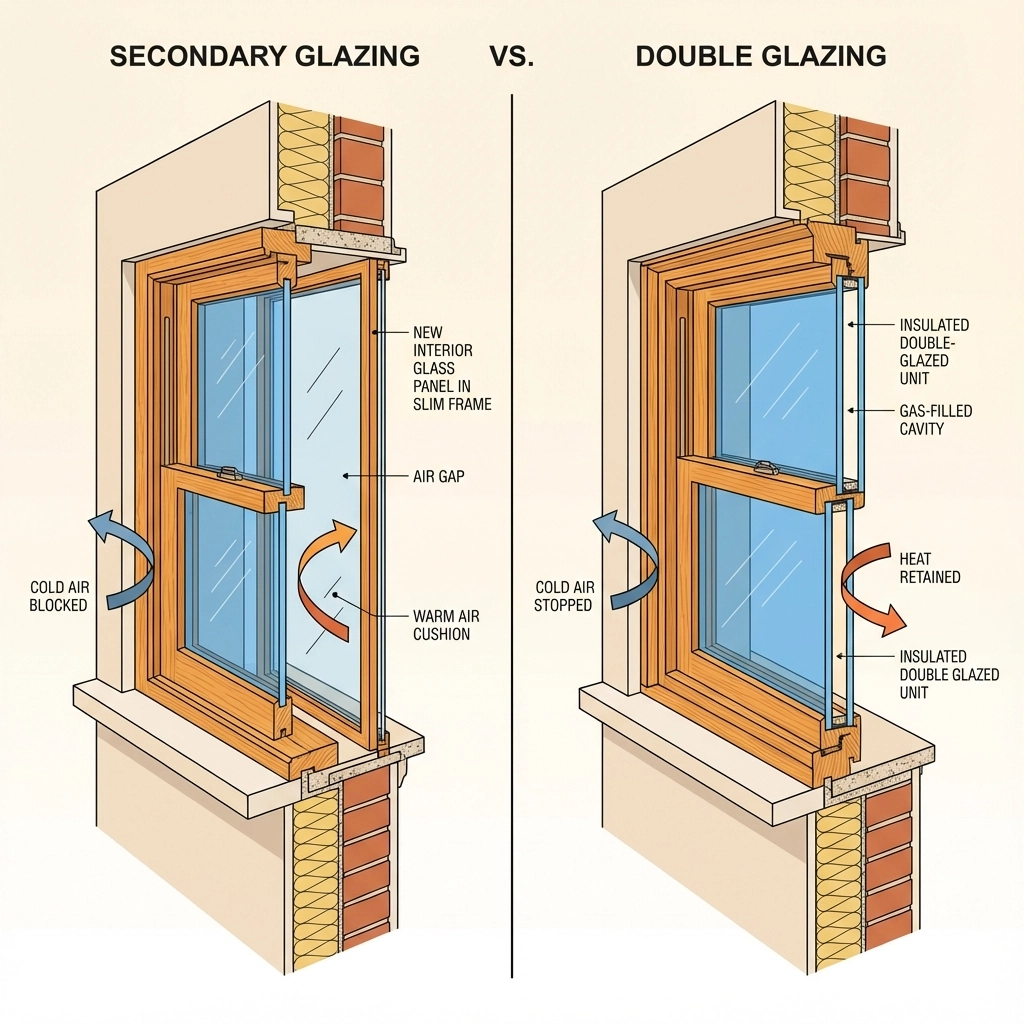
If you own a Victorian terrace, Georgian townhouse, or any period property, you've likely faced this dilemma: how do you improve energy efficiency and reduce noise without compromising your home's historic character? The choice between secondary glazing and double glazing isn't just about performance — it's about preservation, planning permission, and practicality.
For listed buildings and conservation areas, secondary glazing is almost always the superior choice. Here's why, backed by real data and expert insights.
What is Secondary Glazing?
Secondary glazing involves adding a second pane of glass to the interior side of your existing windows, creating an insulating air gap typically between 100-150mm. This system preserves your original windows completely while providing modern thermal and acoustic benefits. Options include vertical sliding for sash windows, horizontal sliding for wide openings, lift-out panels for seasonal use, and fixed panels for maximum performance.
The key advantage? It's practically invisible from the street, maintaining your property's authentic appearance while delivering measurable performance improvements.
What is Double Glazing?
Double glazing replaces your entire window with two panes of glass separated by a 12-20mm cavity, usually filled with argon gas. While highly effective for modern properties, it fundamentally alters the window's appearance and structure — a significant issue for Edwardian, Victorian, and Georgian properties.
Head-to-Head Performance Comparison
| Factor | Secondary Glazing | Double Glazing |
|---|---|---|
| Heat Loss Reduction | 65-70% | 90% |
| Noise Reduction | Up to 80% | ~50% |
| Cost | £350-£1,200 per window | £700-£2,400 per window |
| Planning Permission | Not required (even listed buildings) | Usually required for heritage properties |
| Installation Time | 1-2 hours per window | Full day per window + removal |
| Reversibility | 100% reversible | Permanent alteration |
| Payback Period | 3-8 years | 15-25 years |
| Impact on Original Windows | Zero - preserves completely | Total replacement |
Why Secondary Glazing Wins for Heritage Properties
1. No Planning Permission Headaches
The biggest advantage: secondary glazing doesn't require planning permission, even on Grade I, II*, or II listed buildings. Conservation officers consistently approve secondary glazing because it doesn't alter the external appearance.
Double glazing, however, typically requires listed building consent and conservation area approval — a process that can take months and often results in rejection.
2. Superior Acoustic Performance
Here's where secondary glazing actually outperforms double glazing: noise reduction. The 100-150mm air gap in secondary glazing systems provides superior acoustic insulation compared to double glazing's narrow 12-20mm cavity.
- Secondary glazing: Up to 80% noise reduction
- Double glazing: Approximately 50% noise reduction
For London properties facing busy roads, railway lines, or flight paths, this difference is significant.
3. Preserves Historic Character
Secondary glazing maintains the exact appearance of your original windows from the street. The slim frames are barely visible from inside, and completely invisible externally. This preservation of authentic character is crucial for:
- Listed building compliance
- Conservation area requirements
- Property value protection
- Historic integrity
4. Cost-Effective Solution
Secondary glazing costs approximately half the price of double glazing, with potential savings of up to 80% compared to full window replacement. Typical costs:
- Secondary glazing: £350-£1,200 per window
- Double glazing replacement: £700-£2,400 per window
With energy savings of £200-£400 annually on heating bills, secondary glazing typically pays for itself within 3-8 years.
When Double Glazing Makes Sense
Double glazing is the better choice for:
- Modern properties (post-1970) with no heritage restrictions
- New builds where there are no existing windows to preserve
- Properties with already-replaced windows that have no historic value
- Long-term installations where the 20-45 year lifespan provides better value
However, these scenarios rarely apply to Victorian, Georgian, or Edwardian properties where preservation is key.
Real-World Case Study: Victorian Terrace in Westminster
A Grade II listed Victorian terrace in Westminster installed secondary glazing throughout the property:
Before:
- Annual heating bills: £2,400
- External noise levels: 78dB (main road traffic)
- Planning restrictions: No external alterations permitted
After Secondary Glazing:
- Annual heating bills: £1,650 (£750 saving)
- Internal noise levels: 52dB (70% reduction)
- Installation time: 2 days for entire property
- Planning permission: Not required
Result: The installation paid for itself in 4.2 years while preserving the building's Grade II listing status.
The Heritage Property Advantage
For period property owners, secondary glazing provides:
- Immediate compliance with conservation requirements
- Faster installation with minimal disruption
- Reversible improvements that don't affect property insurability
- Enhanced comfort without compromising authenticity
Conservation officers across London consistently recommend secondary glazing for listed buildings because it achieves meaningful improvements without compromising the original fabric.
Frequently Asked Questions
Q: Will secondary glazing affect my property's value?
A: Secondary glazing typically increases property value by improving energy efficiency while preserving historic character — both highly valued by period property buyers.
Q: How long does secondary glazing last?
A: Quality secondary glazing systems last 20-30 years with minimal maintenance, comparable to double glazing lifespan.
Q: Can I install secondary glazing myself?
A: While possible for standard windows, heritage properties often have unique dimensions and requirements that benefit from professional assessment and installation.
Q: What about condensation between the panes?
A: Professional secondary glazing systems include ventilation channels that prevent condensation buildup when properly installed.
Making the Right Choice
For listed buildings and period properties, the choice is clear: secondary glazing provides the optimal balance of performance, compliance, and preservation. While double glazing offers superior thermal performance, the regulatory hurdles and permanent alterations make it unsuitable for most heritage properties.
Secondary glazing delivers:
- 65-70% thermal improvement
- Up to 80% noise reduction
- 100% planning compliance
- Complete reversibility
- Half the cost of replacement
The question isn't whether secondary glazing performs as well as double glazing — it's whether you can achieve double glazing legally and appropriately for your heritage property. In most cases, you can't. Learn more in our planning permission guide or see our listed buildings guide.
Ready to Upgrade Your Period Property?
If you own a listed building or period property in London, secondary glazing offers the perfect solution for modern comfort without compromising historic integrity. Our heritage property specialists provide free consultations, planning guidance, and bespoke solutions for Victorian, Georgian, and Edwardian windows.
Commercial Property Comparison
The same principles apply to commercial buildings. We help office buildings, hotels, schools, healthcare facilities, and retail spaces upgrade their heritage windows without compromising protected status.
Service Areas
We serve properties across Central London, West London, North London, South London, East London, Greater London, and the Home Counties. See our case studies for real examples of successful installations.