Complete Guide to Secondary Glazing for Sash Windows in London
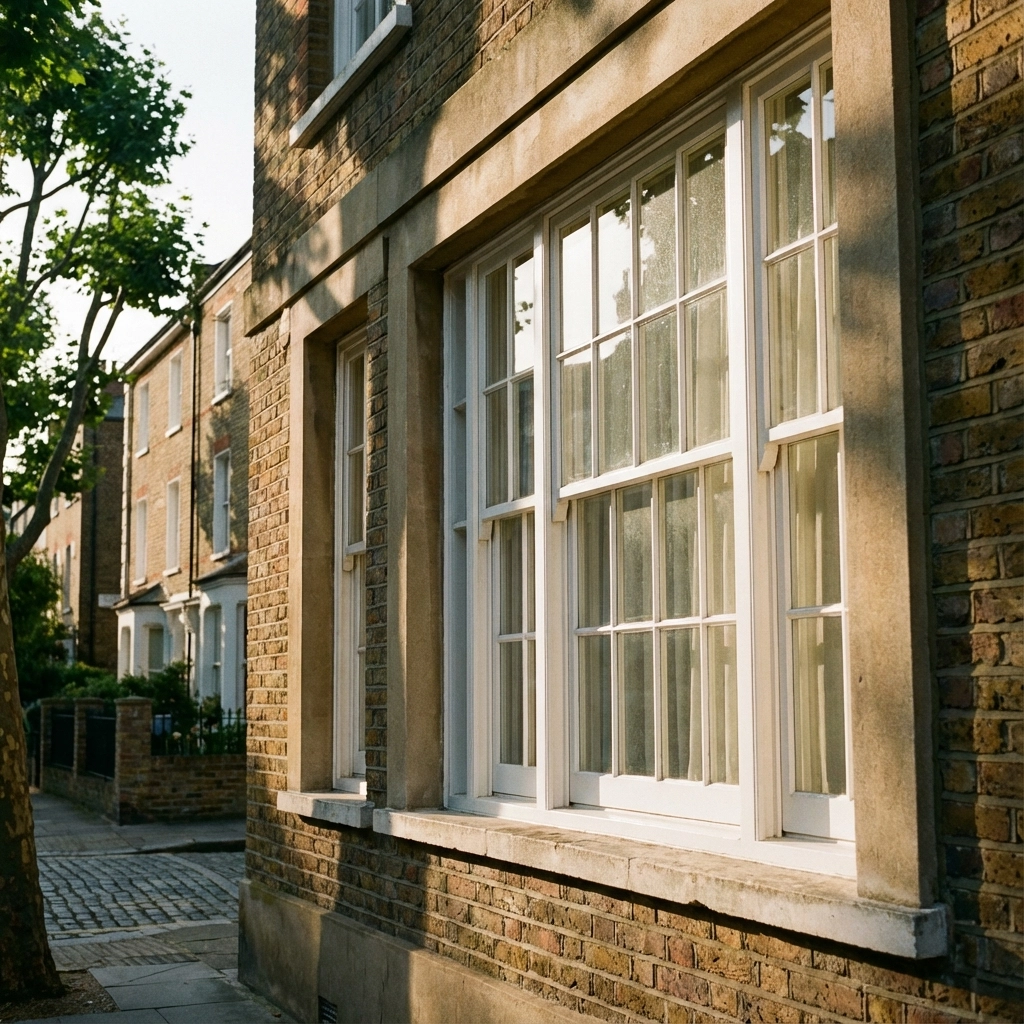
Sash windows are one of London's most iconic architectural features, gracing everything from Georgian terraces in Bloomsbury to Victorian mansions in Kensington. But while these beautiful windows define the character of period properties across the capital, they often come with significant drawbacks: draughts, noise, heat loss, and sky-high energy bills.
If you're living in a London period property with original sash windows, secondary glazing could be the perfect solution. It lets you keep the historic charm while dramatically improving comfort and energy efficiency – all without the planning headaches that come with window replacement in conservation areas.
Understanding London's Sash Windows
Sash windows have dominated London's residential architecture for over 300 years, and understanding your window type is crucial for choosing the right secondary glazing solution.
Georgian Sash Windows (1714-1830)
Georgian sash windows feature distinctive 6-over-6 or 12-over-12 pane configurations with thick glazing bars and robust timber frames. These windows are typically found in areas like Marylebone, Bloomsbury, and Westminster. The frames are usually substantial, making them ideal candidates for most secondary glazing options.
Victorian Box Sash Windows (1837-1901)
Victorian sash windows evolved to include larger panes of glass with thinner glazing bars, often in 2-over-2 or 4-over-4 configurations. You'll find these throughout areas like Islington, Clapham, and Hampstead. Victorian sashes often feature decorative horns at the bottom rail and more sophisticated counterweight systems.
Edwardian Sash Windows (1901-1914)
Edwardian windows continued the Victorian trend toward larger glass areas but often incorporated Art Nouveau influences. These are common in areas like Dulwich, Ealing, and parts of North London developed in the early 1900s.
Why Sash Windows Dominate London Properties
London's building regulations and fire safety requirements from the 18th century onwards made sash windows the preferred choice for urban development. The ability to open the top and bottom sashes created excellent ventilation – crucial in densely populated areas. Additionally, the Building Act of 1774 mandated specific window designs for different classes of houses, cementing the sash window's place in London architecture.
Today, strict conservation area rules and listed building protections mean that millions of London homes still feature original or replica sash windows. While this preserves the city's historic character, it also means homeowners must work within these constraints when improving energy efficiency.
Common Problems with Original Sash Windows
Living with original sash windows in London comes with familiar frustrations:
Draughts and Air Leakage
Original sash windows can lose up to 25% of your home's heat through gaps in the frame, sashes, and around the glazing. Learn more about thermal insulation solutions.
Noise Pollution
London's urban environment means constant exposure to traffic noise, aircraft, sirens, and construction. See our noise reduction solutions for acoustic protection.
Condensation Issues
The combination of London's high humidity and poor thermal performance in single glazing creates persistent condensation problems, leading to mould growth and timber rot.
Security Vulnerabilities
Traditional sash windows with original catches and latches offer minimal security protection. See our security solutions.
Rattling and Operational Issues
Settlement over time means many sash windows no longer fit properly in their frames, causing rattling in wind and difficulty opening or closing.
High Energy Costs
With U-values typically around 5.0 W/m²K, original sash windows are major contributors to high heating bills. London homeowners often see energy bills 20-30% higher than properties with modern glazing. Read our cost guide.
Why Secondary Glazing is Perfect for Sash Windows
Unlike window replacement, secondary glazing works with your existing sash windows rather than against them. Here's why it's the ideal solution for London period properties:
Preserves Original Character
Secondary glazing is installed on the interior side of your existing windows, leaving the external appearance completely unchanged. This means you can improve performance while maintaining the authentic look that defines your property's character.
No Planning Permission Required
Because secondary glazing doesn't alter the external appearance of your property, it typically doesn't require planning permission, even in conservation areas or for listed buildings. See our planning permission guide.
Reversible Solution
Unlike replacement windows, secondary glazing can be completely removed without damaging the original windows. This reversibility is often a requirement for listed building consent. Learn more with our lift-out panel systems.
Works with Existing Hardware
Quality secondary glazing systems are designed to work around existing window furniture, sash cords, and pulleys, preserving the original operating mechanism of your windows. Check our case studies for examples.
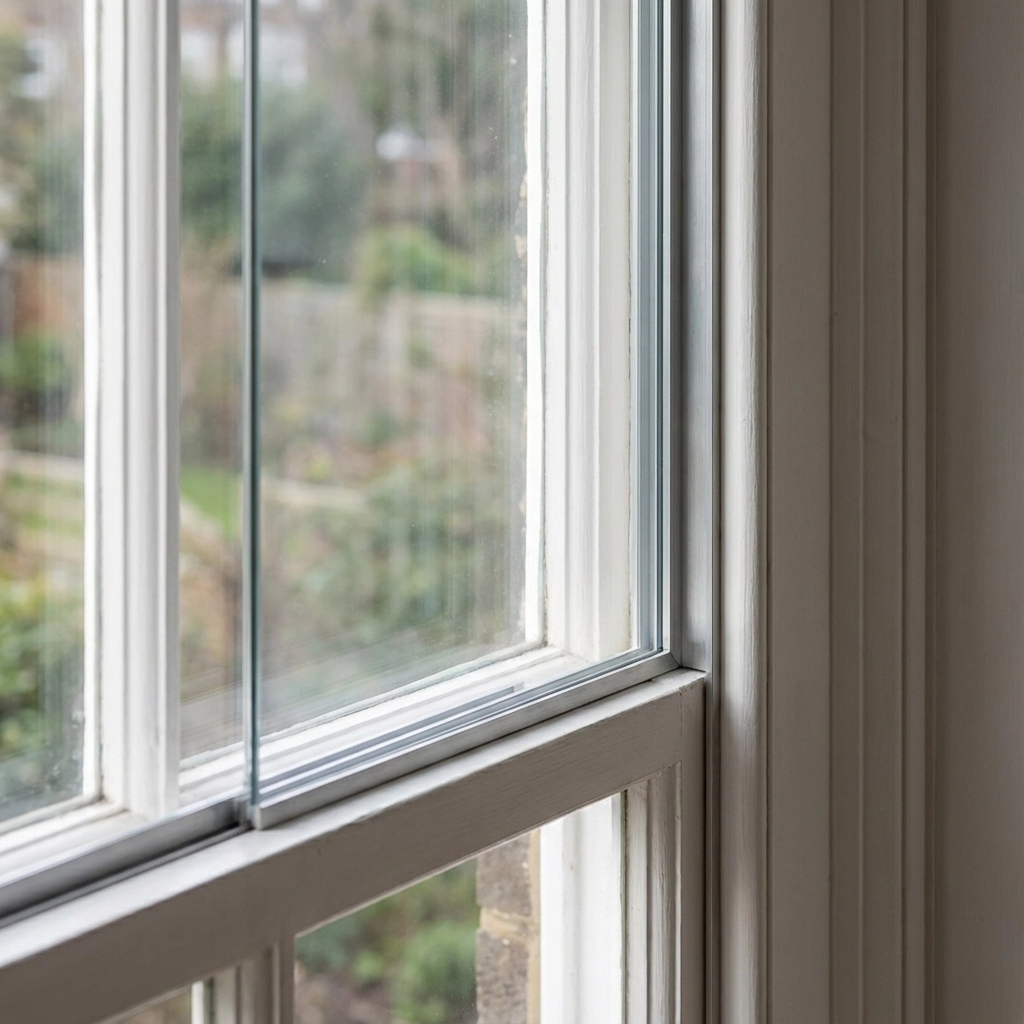
Complete Guide to Secondary Glazing Options for Sash Windows
Vertical Sliding Secondary Glazing
Best for: Windows you use regularly, properties where aesthetics are paramount
Vertical sliding secondary glazing mirrors the operation of your original sash windows, with panes that slide up and down independently. This creates an authentic experience while providing modern performance benefits.
The system uses lightweight aluminum frames that sit just 50-75mm from your original window, creating an optimal air gap for thermal and acoustic performance. The sliding mechanism is smooth and quiet, using modern materials and engineering while respecting the traditional sash window operation.
Advantages
- • Maintains authentic window operation
- • Excellent thermal and acoustic performance
- • Easy access to original windows for cleaning
- • Matches the architectural intent of sash windows
Considerations
- • Higher initial cost than fixed options
- • Requires proper installation for smooth operation
Lift-Out Secondary Glazing
Best for: Windows rarely opened, budget-conscious installations, rental properties
Lift-out panels provide excellent thermal and acoustic performance at the most affordable price point. The panels are held in place by magnetic strips or simple catches and can be completely removed when access to the original window is needed.
This option is particularly popular with landlords and tenants because it provides significant benefits without permanent alterations to the property.
Advantages
- • Most cost-effective option
- • Easy to install and remove
- • Excellent performance when closed
- • No ongoing maintenance of moving parts
Considerations
- • Less convenient for regular use
- • Storage space needed when panels removed
- • May not suit windows requiring frequent opening
Hinged Secondary Glazing
Best for: Easy cleaning access, windows opened moderately, maintenance accessibility
Hinged secondary glazing opens like a casement window, providing full access to your original sash window for cleaning and maintenance. The hinged panels can be configured to open inward or outward (where space permits) and can include multiple opening points for larger windows.
Modern hinged systems use concealed hinges and secure locking mechanisms to maintain clean lines and security.
Advantages
- • Easy access for cleaning both panes
- • Good balance of performance and convenience
- • Secure locking mechanisms available
- • Suitable for various window sizes
Considerations
- • Requires adequate space for panel to open
- • More complex installation than lift-out options
Fixed Secondary Glazing
Best for: Windows never opened, maximum performance, noise-critical areas
Fixed secondary glazing provides the ultimate thermal and acoustic performance by eliminating all moving parts and potential air leaks. The panels are permanently fixed within the window reveal, creating an airtight seal.
This option is ideal for windows facing busy roads, railway lines, or airport flight paths where maximum noise reduction is the priority.
Advantages
- • Maximum thermal and acoustic performance
- • No maintenance of moving parts
- • Most secure option
- • Lowest long-term cost
Considerations
- • No access to original windows
- • Permanent installation
- • Not suitable if original windows need regular maintenance
Horizontal Sliding Secondary Glazing
Best for: Wide windows, bay windows, windows with restricted head room
Horizontal sliding systems work well for wider sash windows or bay window configurations where vertical sliding might not be practical. The panels slide horizontally across the window opening, providing access to different sections of the original window.
This option is less common for traditional sash windows but can be ideal for Edwardian bay windows or unusually configured openings.
Advantages
- • Suitable for wide openings
- • Works in restricted height situations
- • Can provide partial opening options
- • Good for bay window configurations
Considerations
- • Less traditional appearance for sash windows
- • May require more space at sides
- • More complex for very wide openings
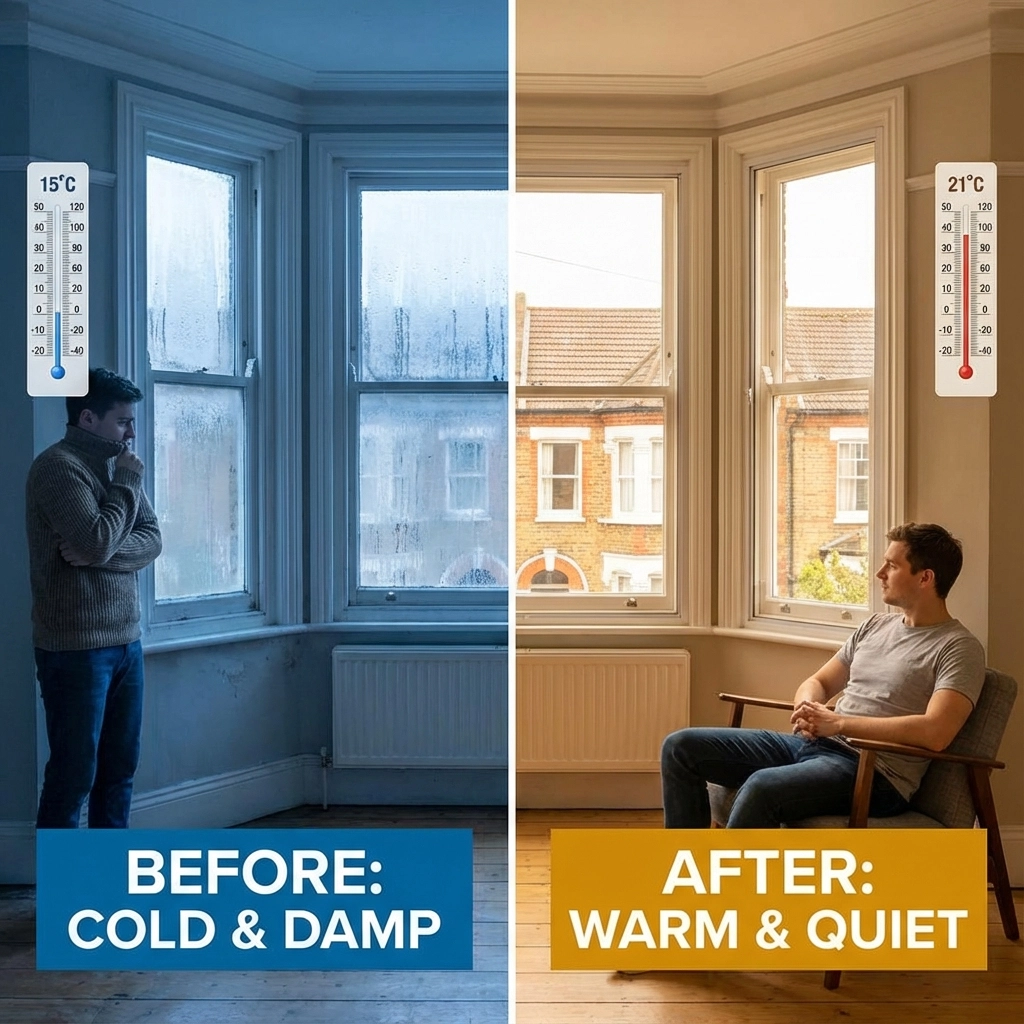
Performance Benefits You Can Expect
Thermal Insulation Improvements
Secondary glazing dramatically improves the thermal performance of your sash windows. While original single-glazed sash windows typically have U-values around 5.0 W/m²K, adding secondary glazing can reduce this to 1.8-2.8 W/m²K depending on the air gap and glass specification.
This improvement translates to real energy savings. London homeowners typically see heating bill reductions of 15-25% after installing secondary glazing on sash windows, with larger savings in particularly draughty properties.
Noise Reduction Performance
London's urban environment creates constant noise challenges, but secondary glazing can reduce external noise by 45-65 decibels, depending on the system configuration and glass specification.
For maximum noise reduction, acoustic laminated glass in the secondary glazing combined with a 100-150mm air gap can achieve reductions of up to 80%. This can transform a noisy street-facing room into a peaceful living space.
Draught Elimination
One of the most immediately noticeable benefits of secondary glazing is the complete elimination of draughts. The sealed air gap created by the secondary glazing stops cold air infiltration that makes period properties uncomfortable in winter.
Condensation Reduction
Secondary glazing creates a warmer interior surface temperature, virtually eliminating condensation problems on the inner pane. The air gap also provides some moisture buffer, reducing humidity-related issues.
Step-by-Step Installation Process
Initial Survey and Measurement
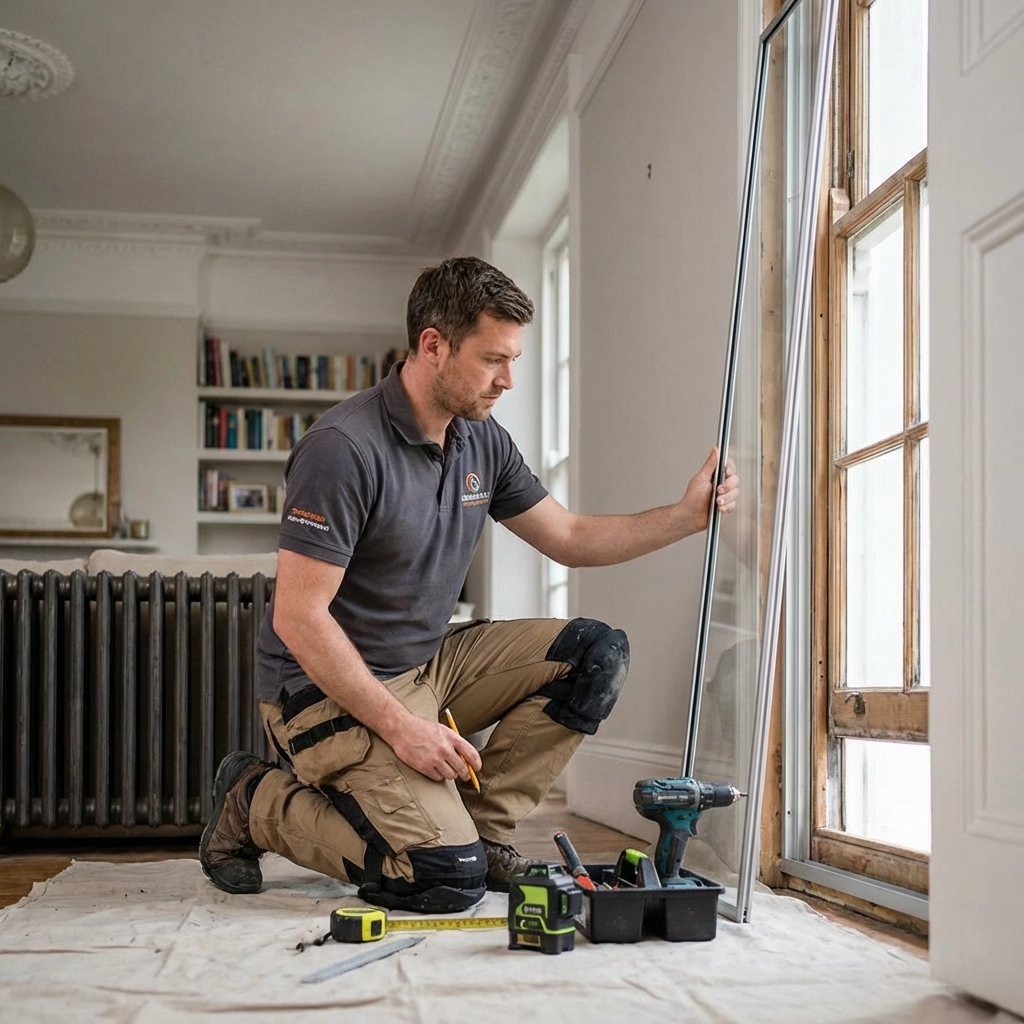
Professional installation begins with a detailed survey of your existing sash windows. Experienced installers will:
- Measure each window opening precisely
- Assess the condition of existing frames
- Check for any irregularities or settlement issues
- Discuss your priorities for thermal performance, acoustic performance, and ease of use
- Identify any potential complications or special requirements
Custom Manufacturing
Secondary glazing for sash windows is always custom-made to ensure perfect fit and optimal performance. Manufacturing typically takes 3-4 weeks and includes:
- Precision cutting of aluminum frames
- Glass cutting and edge polishing
- Hardware fitting and adjustment
- Quality control testing
Installation Day
Professional installation is usually completed in one day for most London homes:
Morning Setup (9:00-10:00)
- • Arrival and workspace preparation
- • Protection of furniture and flooring
- • Tool and material setup
Installation Process (10:00-15:00)
- • Mounting track or frame installation
- • Panel fitting and adjustment
- • Hardware calibration and testing
- • Seal verification and performance checking
Completion and Handover (15:00-16:00)
- • Final quality checks
- • Operation demonstration
- • Care and maintenance guidance
- • Warranty documentation
Cost Comparison: Secondary Glazing Options for London Sash Windows
| Option | Price Range per Window | Best For | Thermal Performance | Acoustic Performance |
|---|---|---|---|---|
| Vertical Sliding | £500-£800 | Regular use, authentic operation | Excellent (U-value 1.8-2.2) | Very Good (45-60dB reduction) |
| Lift-Out Panels | £300-£500 | Budget-conscious, occasional use | Excellent when closed (U-value 1.8-2.0) | Excellent when closed (50-65dB) |
| Hinged Units | £400-£650 | Easy maintenance access | Very Good (U-value 2.0-2.5) | Good (40-55dB reduction) |
| Fixed Panels | £350-£550 | Maximum performance | Outstanding (U-value 1.6-1.9) | Outstanding (55-80dB reduction) |
| Horizontal Sliding | £550-£900 | Wide windows, bay configurations | Good to Excellent (U-value 2.0-2.8) | Good to Very Good (40-60dB) |
Prices include professional installation and are typical for London installations as of 2026. Costs vary based on window size, glass specification, and installation complexity.
Real London Case Studies
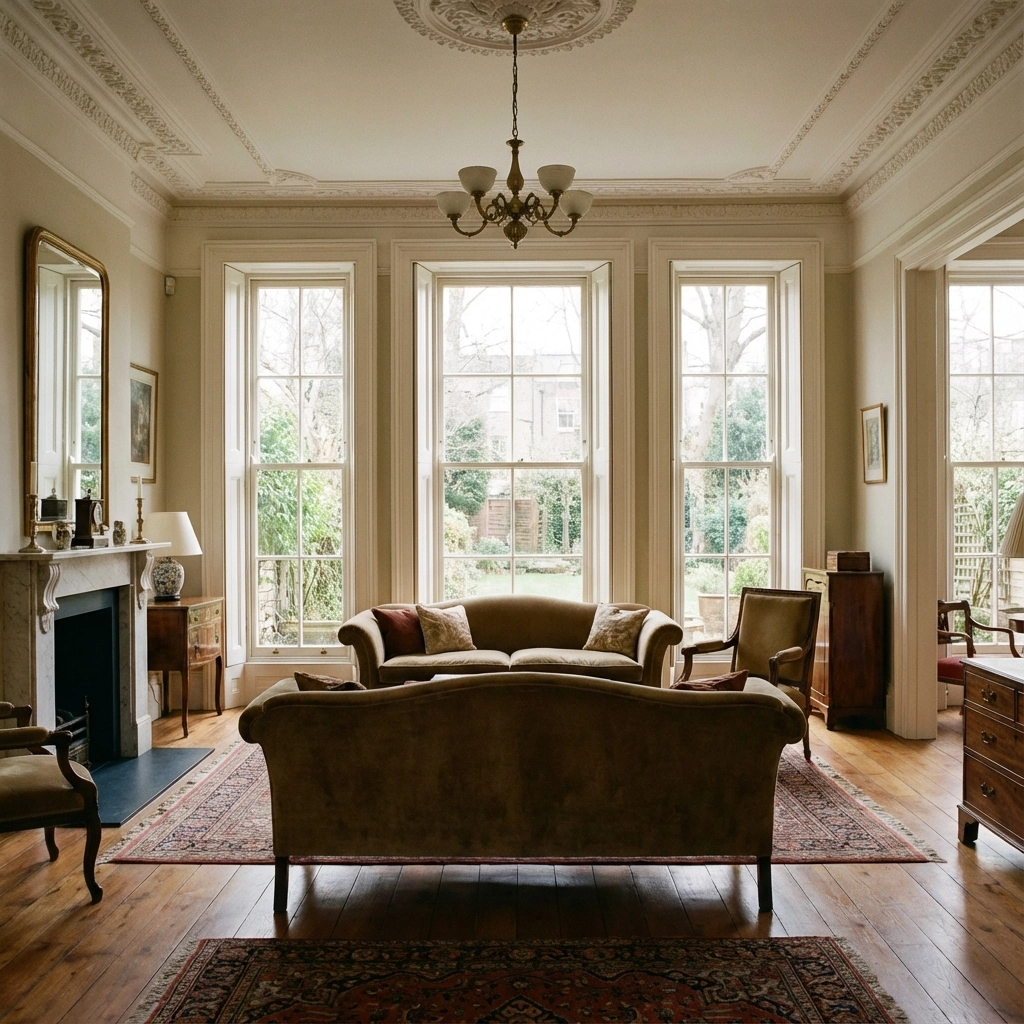
Case Study 1: Victorian Terraced House, Islington
Property: 1880s Victorian terrace with original box sash windows
Challenge: Severe draughts, high energy bills, street noise from busy A-road
Solution: Vertical sliding secondary glazing with acoustic laminated glass
Results:
- • 28% reduction in heating bills
- • Noise levels reduced from 68dB to 35dB
- • Complete elimination of draughts
- • Total cost: £4,200 for 6 windows
"The difference is incredible. We can actually use our front reception room in winter now, and we sleep through the night despite living on such a busy road."
– Sarah M., Homeowner
Case Study 2: Georgian Townhouse, Belgravia
Property: Grade II listed 1820s townhouse with 12-over-12 sash windows
Challenge: Conservation restrictions, historic windows requiring preservation
Solution: Lift-out secondary glazing with slim aluminum frames
Results:
- • No planning permission required
- • 22% energy bill reduction
- • Windows easily removed for professional maintenance
- • Total cost: £3,600 for 8 windows
"We needed a solution that wouldn't compromise the listed building status. The secondary glazing is virtually invisible from outside but has transformed the comfort inside."
– James K., Property Owner
Case Study 3: Edwardian Semi-Detached, Hampstead
Property: 1905 Edwardian house with large bay windows
Challenge: Complex bay window configuration, aircraft noise from Heathrow flight path
Solution: Combination of fixed panels and horizontal sliding for bay areas
Results:
- • 45dB aircraft noise reduction
- • 19% heating cost savings
- • Maintained bay window functionality
- • Total cost: £5,800 for 10 windows including complex bay configuration
"Living under the Heathrow flight path was becoming unbearable. Now we barely notice the planes, and our energy bills have dropped significantly."
– Maria P., Homeowner
Planning Permission and Listed Building Considerations
Conservation Area Properties
Secondary glazing typically doesn't require planning permission in London conservation areas because it doesn't alter the external appearance of the building. However, it's worth checking with your local planning authority, especially for:
- Properties of particular historic significance
- Areas with specific supplementary planning guidance
- Buildings contributing significantly to the conservation area character
Listed Buildings
For Grade I, II*, and II listed buildings, secondary glazing is often the only permitted method of improving window performance. The reversible nature of secondary glazing makes it acceptable to most conservation officers, but listed building consent may still be required for:
- Internal alterations to historic fabric
- Buildings of exceptional historic significance
- Properties where even minor changes require consent
Heritage Compliance Tips
- Choose slim-profile systems that minimize visual impact
- Select frame colors that complement existing window furniture
- Ensure the system can be completely removed without trace
- Document the installation method for heritage records
- Consider acoustic glass where noise reduction is the primary goal
Maintenance and Care Guide
Daily Operation
Vertical Sliding Systems:
- • Operate smoothly with light pressure
- • Clean tracks monthly with soft brush
- • Lubricate runners annually with appropriate lubricant
Lift-Out Panels:
- • Check magnetic seals for debris
- • Store panels carefully when removed
- • Clean contact surfaces regularly
Annual Maintenance
Glass Cleaning:
Use standard window cleaning products. Access original windows when needed for exterior cleaning. Check seals and gaskets for wear.
Hardware Checks:
Inspect locking mechanisms. Test smooth operation of moving parts. Check for any loosening of fixings.
Professional Servicing:
Most secondary glazing systems require minimal maintenance, but annual professional checks ensure optimal performance and extend system life.
Choosing the Right Option for Your Needs
Consider Your Usage Patterns
- High-Use Windows: Choose vertical sliding or hinged options for windows you open regularly for ventilation.
- Low-Use Windows: Lift-out or fixed panels offer excellent performance for windows rarely opened.
- Mixed Use: Consider different options for different rooms based on specific requirements.
Prioritize Your Main Concerns
- Energy Efficiency Priority: Fixed or lift-out panels with optimal air gaps provide maximum thermal performance.
- Noise Reduction Priority: Acoustic laminated glass with larger air gaps offers superior sound reduction.
- Convenience Priority: Vertical sliding systems provide the most authentic and convenient operation.
- Budget Priority: Lift-out panels offer excellent value for money.
Room-Specific Recommendations
Living Rooms: Vertical sliding for authentic operation and occasional ventilation
Bedrooms: Fixed panels for maximum noise reduction and thermal comfort
Kitchens: Hinged units for easy cleaning access
Bathrooms: Lift-out panels (moisture considerations apply)
DIY vs. Professional Installation
DIY Secondary Glazing
Some secondary glazing systems are designed for DIY installation, particularly magnetic lift-out systems. DIY advantages include:
- Lower initial cost
- Flexibility to work at your own pace
- No need to coordinate with installers
However, DIY installations often compromise performance through:
- Imprecise measurements leading to air gaps
- Inadequate sealing reducing thermal performance
- Poor acoustic performance from incorrect installation
Professional Installation Benefits
Professional installation ensures:
- Precise measurements and perfect fit
- Optimal thermal and acoustic performance
- Warranty coverage and ongoing support
- Compliance with building regulations
- Integration with existing window hardware
Cost Difference: Professional installation typically adds £100-£200 per window but ensures optimal performance and longevity.
Common Mistakes to Avoid
Installation Errors
- Insufficient Air Gap: Air gaps smaller than 50mm significantly reduce performance benefits.
- Poor Sealing: Inadequate sealing around the perimeter eliminates most thermal and acoustic benefits.
- Wrong Glass Choice: Standard glass when acoustic glass is needed for noise-critical locations.
- Inadequate Hardware: Cheap fixings or inadequate hardware leading to operational problems.
Planning Mistakes
- Not Checking Regulations: Assuming no consent needed when specific permissions may apply.
- Ignoring Existing Problems: Installing secondary glazing over windows with existing maintenance issues.
- Wrong System Choice: Choosing based on cost alone rather than usage requirements.
- No Professional Survey: DIY measurements leading to poor fit and performance.
Frequently Asked Questions
Will secondary glazing affect the appearance of my windows from inside?
Quality secondary glazing has minimal visual impact. Slim aluminum frames typically add only 20-30mm to window reveals and can be color-matched to existing fixtures.
Can I still open my original sash windows?
Yes, with most systems. Vertical sliding and hinged options allow full access to original windows, while lift-out panels can be easily removed when needed.
How long does secondary glazing last?
Quality systems typically last 15-20 years with minimal maintenance. Aluminum frames don't deteriorate, and components can be easily replaced if needed.
How much noise reduction can I expect?
Typical installations achieve 45-60dB noise reduction, with acoustic specifications reaching up to 80dB reduction in optimal configurations.
Will secondary glazing stop condensation?
Yes, secondary glazing virtually eliminates condensation on the inner pane by creating a warmer surface temperature and reducing humidity contact.
How much will I save on energy bills?
London homeowners typically see heating bill reductions of 15-25%, with larger savings in particularly draughty properties.
Do I need planning permission?
Secondary glazing typically doesn't require planning permission as it doesn't alter external appearance. Listed buildings may need consent for internal alterations.
Can secondary glazing be fitted to any sash window?
Yes, secondary glazing can be custom-made to fit virtually any window configuration, including irregular or settled frames common in period properties.
How disruptive is installation?
Installation is usually completed in one day with minimal disruption. No structural work is required, and windows can be used immediately after installation.
How do I clean secondary glazing?
Clean with standard window cleaning products. Most systems provide access to both sides of all glass surfaces for thorough cleaning.
Can secondary glazing be repaired if damaged?
Yes, individual components can be replaced without affecting the whole system. Glass panels, seals, and hardware are all replaceable.
Ready to Transform Your Sash Windows?
Secondary glazing offers the perfect solution for London homeowners who want to enjoy the character of period sash windows while achieving modern comfort and efficiency standards. Whether you're dealing with draughts, noise, or high energy bills, the right secondary glazing system can transform your living experience without compromising your property's historic character.
The key to success is choosing the right system for your specific needs and ensuring professional installation for optimal performance. With proper specification and installation, secondary glazing provides decades of improved comfort, energy savings, and acoustic protection.
Ready to explore your options? Contact our team of secondary glazing specialists for a free consultation and quote. We'll assess your specific requirements and recommend the ideal solution for your London property's sash windows.
Get your free quote today – transform your period property's comfort while preserving its timeless character.
Call 020 7060 1572 or email info@secondaryglazingspecialist.com to book your free consultation.